Terms Starting with A
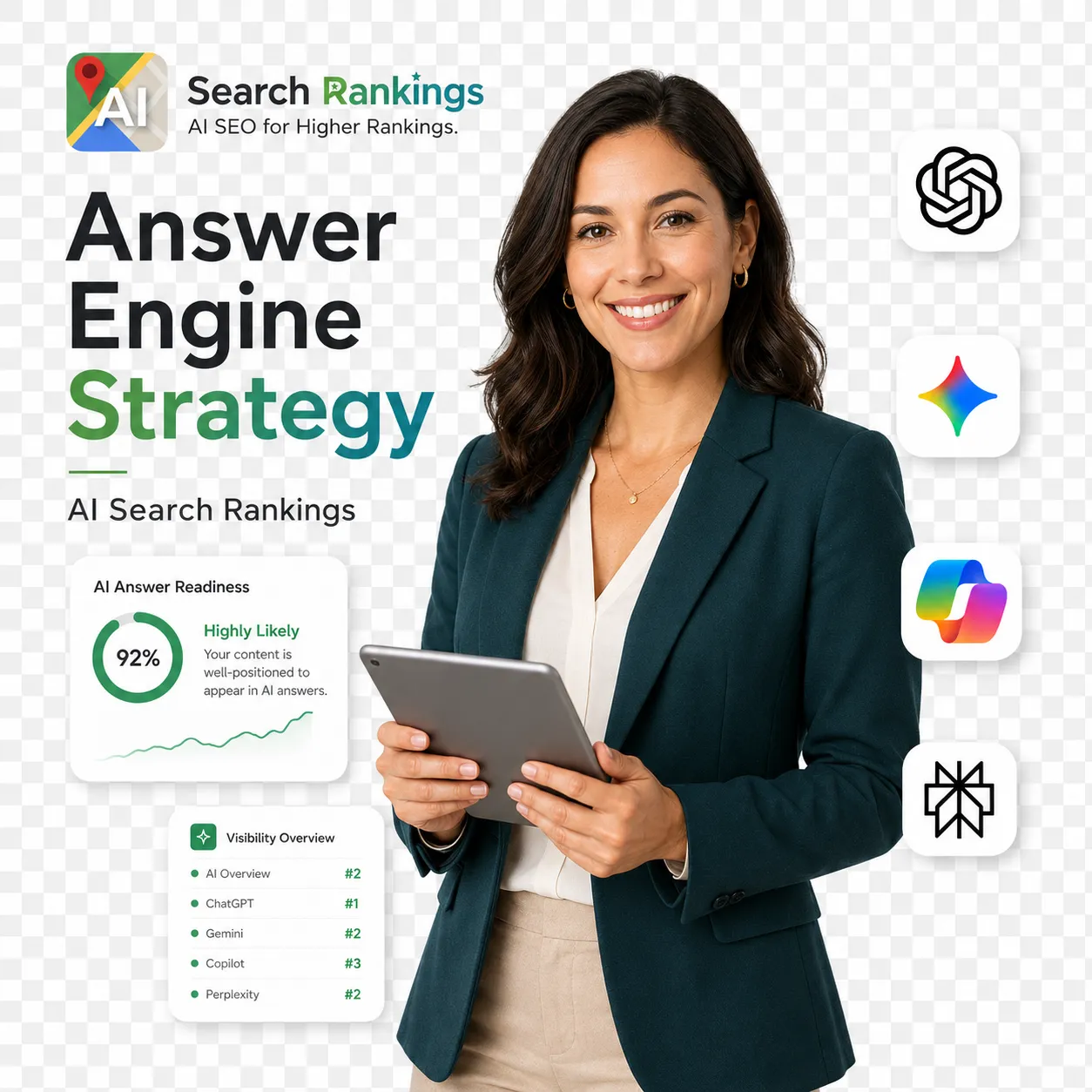
AI Answer Readiness Score™ (AARS)
Definition
A proprietary metric (0-100) that quantifies how likely AI models (Google AI Overviews, Google Gemini, ChatGPT, Perplexity) are to cite your brand as the definitive answer source. AI Answer Readiness Score™ (AARS) measures foundational trust signals including Entity Maturity, Schema Parity, and E-E-A-T strength. The higher your AI Answer Readiness Score™ (AARS), the greater your probability of AI citation and Zero-Click Optimization.
Why It Matters
AARS is the critical KPI for Generative Engine Optimization (GEO). Traditional SEO rankings don't predict AI citation, AARS does. It's the boardroom-ready metric that proves AI visibility risk or opportunity.
Answer Engine Optimization (AEO)
Definition
The strategic practice of optimizing content and structure to win featured snippets and AI-generated answers. Answer Engine Optimization focuses on answer-first content, perfect Schema markup, and direct question-answer formatting to position your brand as the definitive source for high-intent queries.
Why It Matters
Users increasingly get their answers directly in search results without clicking. Answer Engine Optimization ensures your brand is the cited authority in these Zero-Click experiences, maintaining top-of-mind awareness and trust.
Authority Architect
Definition
The mid-tier ($2,499/month) service plan offering comprehensive AI Search Optimization with 5 page audits, 90-Day Answer-Slot Sprint, and priority support. This plan is designed for brands serious about securing AI citation across major platforms.
Why It Matters
Authority Architect provides the perfect balance of deep auditing and prescriptive implementation for mid-market and enterprise brands ready to dominate AI-generated answers.
Terms Starting with B
Brand Trust Battery
Definition
The collective measure of your domain-wide authority, calculated from Entity Maturity, consistent NAP (Name, Address, Phone) data, Schema.org markup quality, and verifiable E-E-A-T signals. It's the foundational "charge" your site holds that determines whether AI models trust you.
Why It Matters
A depleted Brand Trust Battery means AI systems ignore or distrust your content. Building and maintaining a high charge is essential for sustained AI visibility and citation.
Terms Starting with C
Citation Probability
Definition
The likelihood (expressed as a percentage) that an AI model will reference your brand or content as the source in a generated answer. This is influenced by your AI Answer Readiness Score™ (AARS), content quality, semantic clarity, and competitive positioning.
Why It Matters
High citation probability translates to brand visibility, authority perception, and upstream influence on purchase decisions, even in Zero-Click scenarios.
Terms Starting with E
E-E-A-T (Experience, Expertise, Authoritativeness, Trustworthiness)
Definition
Google's quality framework for evaluating content credibility. E-E-A-T signals include author credentials, verifiable expertise, authoritative backlinks, and trust indicators (SSL, privacy policies, secure transactions). AI models use similar trust heuristics when selecting citation sources.
Why It Matters
Strong E-E-A-T signals dramatically increase your AI Answer Readiness Score™ (AARS). Without verifiable expertise and authority, AI systems will choose competitors over you every time.
Entity Consolidation
Definition
The process of unifying all mentions, definitions, and relationships of your brand (and key people) across the web and knowledge graph. This ensures AI models have a single, clear, unambiguous understanding of your entity rather than fragmented or conflicting data.
Why It Matters
Entity ambiguity kills AI citation. Consolidated entities get cited; fragmented entities get ignored. This is a foundational fix for improving AI Answer Readiness Score™ (AARS).
Entity Maturity
Definition
A measure of how well-defined and established your brand entity is within knowledge graphs (Google Knowledge Graph, Wikidata, etc.). High entity maturity means AI models "know" who you are, what you do, and how you relate to other entities with certainty.
Why It Matters
Mature entities are trusted entities. Low entity maturity results in AI models treating your brand as "unknown" or "unverified," drastically reducing citation likelihood.
Terms Starting with G
Generative Engine Optimization (GEO)
Definition
The strategic discipline of optimizing for AI-driven search experiences (Google AI Overviews, Google Gemini, ChatGPT, Perplexity). GEO extends beyond traditional SEO by targeting the ranking factors AI models use: Entity certainty, Schema Parity, E-E-A-T, and semantic clarity.
Why It Matters
As AI-generated answers replace traditional SERPs, GEO is the new competitive battlefield. Brands that master GEO win the narrative; those that don't become invisible.
Generative Ranking Factors
Definition
The signals AI models prioritize when selecting citation sources, distinct from traditional SEO factors. These include: Entity definition quality, Schema.org completeness, E-E-A-T strength, semantic answer clarity, and knowledge graph alignment.
Why It Matters
Optimizing for backlinks alone won't win AI citation. You must optimize for generative ranking factors to appear in AI-generated answers.
Terms Starting with K
Knowledge Graph
Definition
A structured database of entities (people, places, organizations, concepts) and their relationships. Google Knowledge Graph, Wikidata, and similar systems help AI models understand context and authority. Your brand should be a well-defined entity within these graphs.
Why It Matters
AI models rely heavily on knowledge graphs to verify facts and determine source credibility. If you're not in the graph (or poorly defined), you won't be cited.
Terms Starting with L
Large Language Model (LLM)
Definition
The AI systems (GPT-4, Google Gemini, Claude, etc.) powering generative search experiences. LLMs are trained on vast datasets and use probabilistic reasoning to generate answers based on semantic understanding and trust signals.
Why It Matters
Understanding how LLMs select and cite sources is critical to GEO strategy. They don't "rank" like traditional search, they probabilistically choose the most trustworthy, semantically relevant answer.
Terms Starting with N
Narrative Control
Definition
The strategic dominance of how your brand, industry, or topic is described in AI-generated answers. Achieving narrative control means you define the language, framing, and expertise positioning, not your competitors.
Why It Matters
Losing narrative control means competitors shape market perception and customer beliefs about your industry, eroding your authority and market share.
Terms Starting with P
Page-Level AI Answer Readiness Score™ (AARS)
Definition
The AI Answer Readiness Score™ for a specific URL, assessing that page's individual eligibility for AI citation. This is measured across four pillars: Understanding (semantic clarity), Structure (HTML/Schema quality), Eligibility (E-E-A-T signals), and Technical (speed, mobile-friendliness).
Why It Matters
High Site-Level AI Answer Readiness Score™ (AARS) is necessary but not sufficient. Individual pages must also score well to win specific query citations. Page-Level audits prescribe exact fixes.
Terms Starting with S
Schema Parity
Definition
The state where your website's Schema.org structured data perfectly aligns with the knowledge graph models used by AI. Schema Parity means your data is machine-readable, verifiable, and pre-validated for AI citation, reducing the "trust barrier."
Why It Matters
Perfect Schema Parity dramatically increases citation probability by making your content effortless for AI to parse, verify, and cite with confidence.
Semantic Identity
Definition
The cohesive, consistent representation of your brand's meaning and relationships across all digital properties. Strong semantic identity ensures AI models understand your core value proposition, expertise areas, and brand differentiation without ambiguity.
Why It Matters
Weak or inconsistent semantic identity causes AI models to misunderstand or ignore your brand. Building semantic identity is foundational to GEO success.
Site-Level AI Answer Readiness Score™ (AARS)
Definition
The domain-wide AI Answer Readiness Score™ measuring overall brand authority and trust. This is distinct from Page-Level AI Answer Readiness Score™ (AARS) and focuses on Entity Maturity, Schema.org coverage, and E-E-A-T signals across the entire site.
Why It Matters
You must fix Site-Level AI Answer Readiness Score™ (AARS) first before Page-Level optimizations will have meaningful impact. It's the foundational trust signal AI models check before considering individual pages.
Terms Starting with Z
Zero-Click Optimization
Definition
The strategy of maximizing brand visibility and authority in search experiences where users never click through to a website. This includes featured snippets, AI Overviews, and voice search results. The goal is citation and brand recall, not traffic.
Why It Matters
As Zero-Click results dominate search, traditional traffic-based SEO metrics become less relevant. Zero-Click Optimization ensures your brand maintains top-of-mind authority even without clicks.