
You have an AI crawler policy. You just never chose it.
It came with your platform.
Somewhere on your website is a file deciding whether AI Search Engines are allowed to read you. Almost nobody has ever opened it. Sometimes it is quietly blocking exactly the crawlers you most want reading your pages.
What you get: You know exactly which AI Search Engines can read your website, because you chose it deliberately instead of inheriting a setting from a template.
- A checked policy
- A curated page list
- One source of facts
- Kept current
Transparent monthly packages from $799 to $3,500 per month. No free audit to sit through, and no discovery call before you can see a price. Responds within 24 hours during Monday to Friday, 9am to 6pm Pacific Time.
What is llms.txt, and is it worth implementing?
An llms.txt file is a plain text file at the root of your website listing your most important pages with a short description of each, so an AI reading your site gets a curated map instead of working out priority from your menu. It is an emerging convention rather than a required standard, and no tool has to honor it. Alongside it sits the more established and more important job of setting explicit rules for AI crawlers.
The honest assessment is this. The llms.txt file is cheap, low risk, and unproven on its own. Setting your crawler policy deliberately genuinely matters today. We do both together inside the monthly package rather than selling the file as a headline service, because that would overstate what one text file can do.
Every figure on this page comes from our published brand facts, so it says the same thing everywhere you find us.
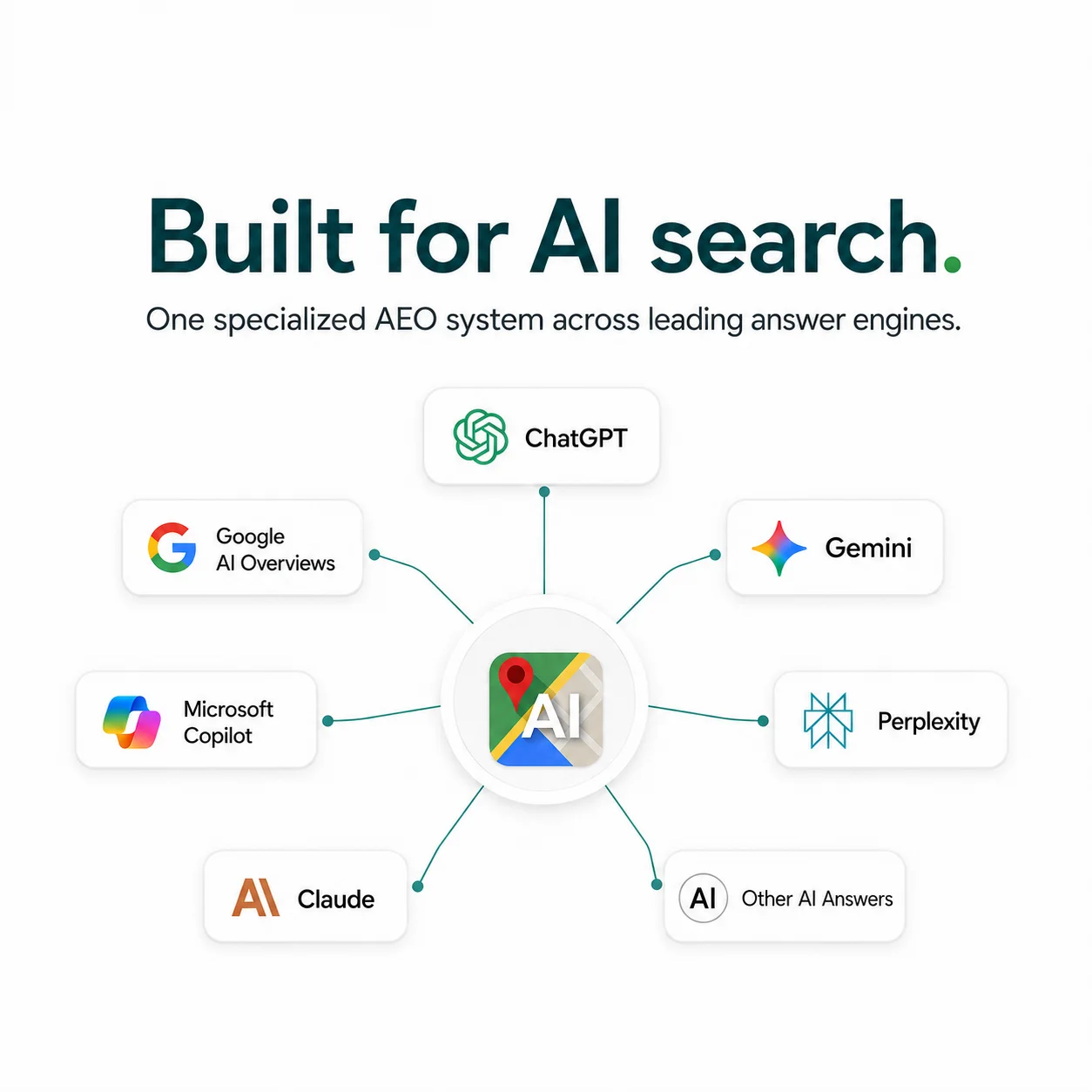
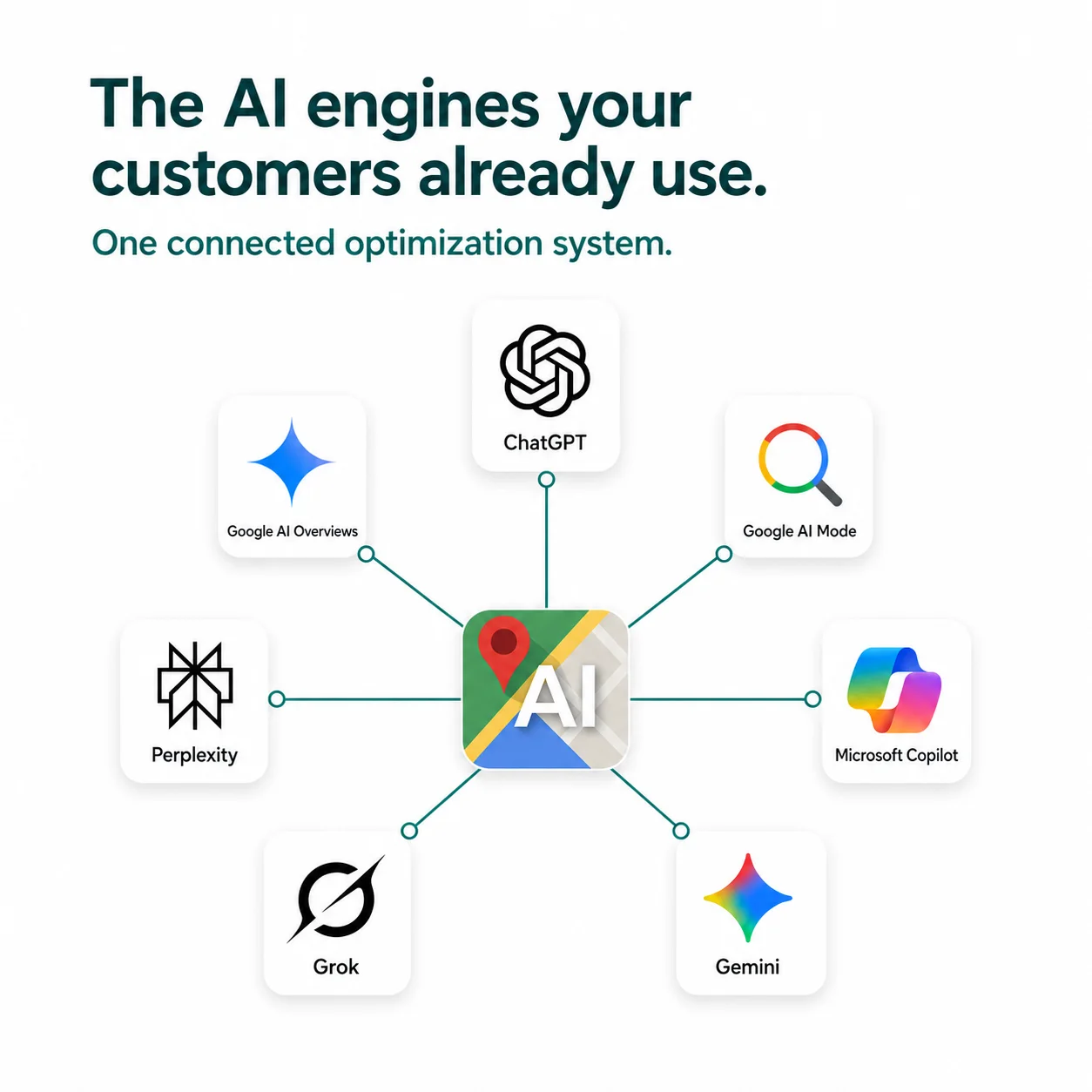
Crawler rules apply to every one of these tools.
ChatGPT, Google AI Overviews, Google AI Mode, Perplexity, Microsoft Copilot and Grok
Whether a tool honors llms.txt varies. Every one of them respects crawler rules, so setting those on purpose affects all of them.
-
 ChatGPT
-
 Google AI Overviews
-
 Google AI Mode
-
 Perplexity
-
 Microsoft Copilot
-
 Grok
Grok
Most websites have never chosen their AI crawler policy.
If nobody set the rules, the rules were set by whatever your platform shipped with. Here are the four situations we find, and each one is a decision that was never actually made.
-
AI crawlers blocked by accident
A blanket rule copied from a template, or a security plugin default, quietly blocks the very tools you most want reading your pages.
-
Nothing signals what matters
A tool has to guess your priorities from your menu and links, so a landing page can look as important as your main service page.
-
No single source for your facts
Your key business details are scattered across pages, so there is no one authoritative place anything can read them from.
-
A file written once and abandoned
A file listing pages that no longer exist is worse than no file, because it sends crawlers to dead ends and wastes the attention you were trying to focus.
What gets set up and kept working.
Set up once, then kept current as part of the normal monthly cycle.
A curated list of your key pages
A short, honest index of the pages that genuinely matter with a plain description of each, rather than a dump of every address you own.
A crawler policy you actually chose
Rules set deliberately for each major AI crawler, with the trade offs explained so the decision is yours rather than your platform default.
Technical workOne page holding your facts
A single published page stating your business details, so everything reading you has one authoritative source rather than a scattered guess.
See oursKept current as you publish
The file gets updated when pages are added, moved, or retired, which is the part a one time setup always fails to do.
LLMs.txt implementation is one of six pillars, not a standalone tactic.
Buying a single tactic rarely moves visibility, because answer engines read the whole picture. Every package works all six pillars together at the level your tier defines.
-
Google + Google Maps Visibility
Advanced Google Business Profile, Google Maps, and local pack support across every priority service area, location, and competitor gap.
-
Google AI Overview + AI Answer Readiness
Track 150-250 local prompts, monitor AI answer accuracy, and structure pages so AI-generated answers describe your business correctly.
-
Website SEO Optimization
Optimize 5-8 pages and publish 2 new local content assets each month with advanced on-page and topical SEO.
-
Local Entity Authority
Map and strengthen business, service, location, and owner/founder entities into one connected local authority graph.
-
Reviews + Trust Signals
Run a reputation-growth strategy with reviews, proof placement, and legitimate local authority and PR opportunities.
-
Conversion + Lead Path Optimization
Optimize the full lead path across calls, forms, and booking links, with priority implementation and executive reporting.
A lot can go wrong with llms.txt implementation. We check every one of these.
This is a small piece of work that gets oversold constantly. Here is how it goes wrong and how we keep it honest.
-
What usually goes wrong
It gets sold as the reason your visibility will change
An agency presents an llms.txt file as a breakthrough tactic and bills accordingly. Adoption is inconsistent and one text file was never going to move your business.
How we make sure it is right
We include it and tell you what it is worth
It is one component inside a package, never a headline. We say plainly that its impact on its own is unproven, because pretending otherwise would be dishonest.
-
What usually goes wrong
AI crawlers get blocked without anyone deciding
A default rule blocks the tools you want reading you. You are invisible to AI answers and nobody knows why, because nobody looked at that file.
How we make sure it is right
We check what you currently allow and block
We read your current rules, tell you exactly which tools can and cannot see you today, and set the policy you actually want with the trade offs written down.
-
What usually goes wrong
Every page gets listed, which lists nothing
A file gets generated automatically containing all six hundred of your pages. That signals no priority at all, which was the entire point of the file.
How we make sure it is right
We choose which pages genuinely matter
Deciding which forty pages out of four hundred belong in the list is a judgment call. That judgment is the actual value, not the file format.
-
What usually goes wrong
It rots into a list of dead pages
The file gets built and never touched. Two years later half the pages have moved and it is actively sending crawlers to errors.
How we make sure it is right
It gets rechecked in the monthly cycle
When pages are published, moved, or retired, the file gets updated in the same pass. It stays a useful map rather than becoming a historical record.
This is the whole reason to hire someone. We would rather tell you this is a small job done properly than sell it as a breakthrough. The crawler policy is the part that genuinely matters today.
Six stages, and what each one produces for LLMs.txt implementation.
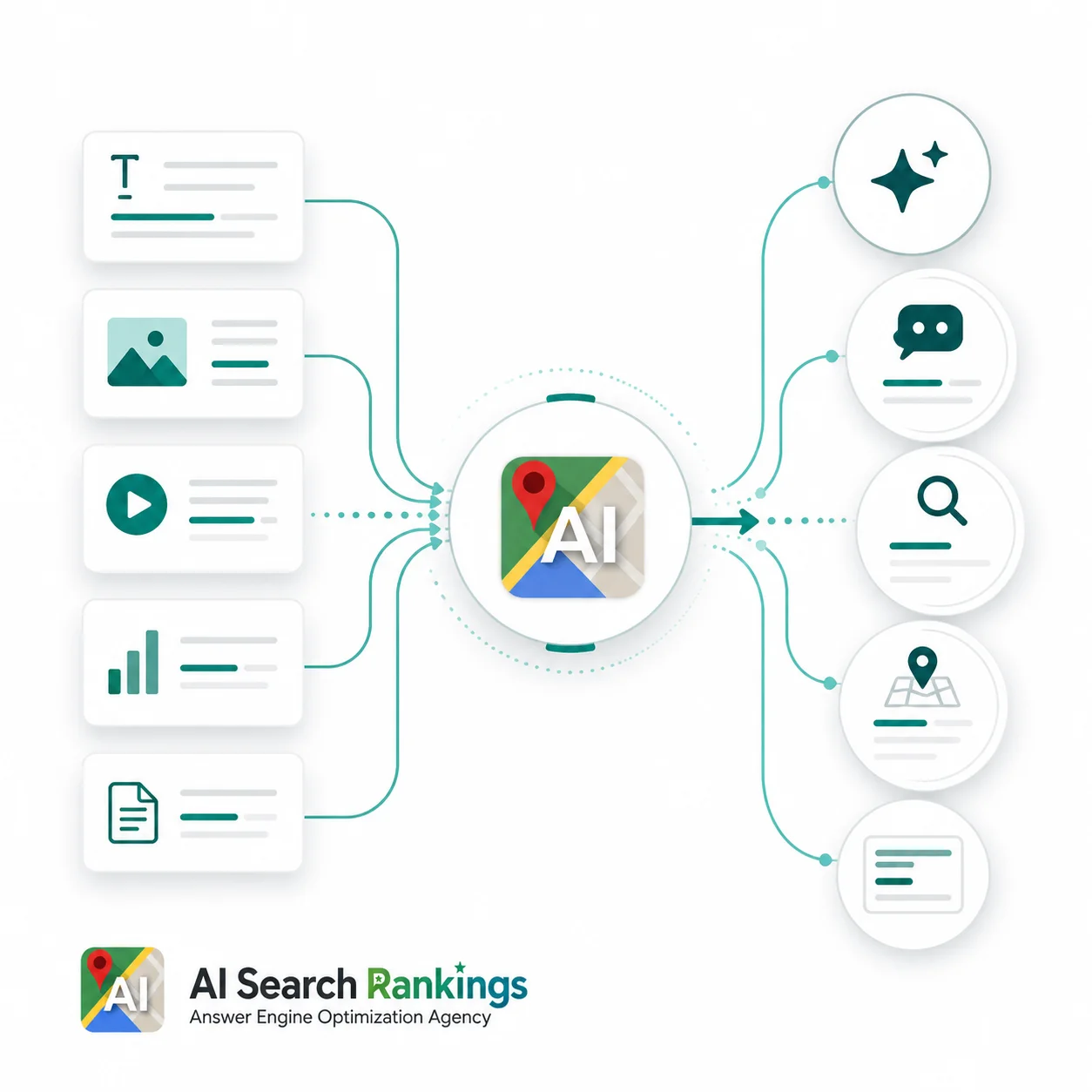
Every engagement runs on the same method, so you always know which stage you are in, what it is producing, and what comes next. The stages are Find, Fix, Structure, Prove, Track, and Grow.
-
Find
Stage 1. Find
Establish what buyers actually ask and where you stand today.
You see your current crawler rules and exactly which AI Search Engines are allowed or blocked today.
-
Fix
Stage 2. Fix
Remove the technical and factual blockers that stop a machine reading you correctly.
You get accidental blocks removed and a policy applied that you actually chose.
-
Structure
Stage 3. Structure
Rebuild the page and its data so an answer engine can lift a correct answer.
You get a curated list of your genuinely important pages with a plain description of each.
-
Prove
Stage 4. Prove
Attach the evidence a buyer and a model both need before recommending you.
You get one page published holding your business facts, so everything has one source.
-
Track
Stage 5. Track
Measure the prompts, the competitors, and the movement every month.
You get monthly checks that the file still matches your website, with dead pages removed.
-
Grow
Stage 6. Grow
Expand coverage into the next set of questions, services, and locations.
You get new priority pages added to the list as you publish them.
Two results we can show you, with their limits stated.
We publish the evidence label and the limitation next to every number, because a result without its scope is a claim, not proof. We do not guarantee AI rankings or citations, because third parties control those systems.
Toolsforhuman.com
AI Search Rankings used schema-first Answer Engine Optimization, layered JSON-LD, robust canonicals, and multilingual hreflang to help Toolsforhuman.com earn 26,300 Microsoft Copilot citations across 160 plus pages, including Spanish-language pages, in a sample window of about three months.
Measured on Microsoft Copilot. The result applies to the documented sample window and does not guarantee future citations.
Read the Toolsforhuman.com case studyLaser Tagging Inc.
AI Search Rankings rebuilt the Laser Tagging Inc. digital brand and website, expanded its service-area relevance across Newark, Fremont, San Jose, and nearby Bay Area communities, and documented 4,460 client-reported Google generative AI impressions in the selected last-three-month window.
Measured on Google AI Overviews and AI Mode. The report measures Google generative AI impressions. It does not prove a ChatGPT recommendation, a click, a booking, a lead, or revenue.
Read the Laser Tagging Inc. case study
The four questions serious buyers ask before they sign.
Each answer sits next to the doubt that prompts it, with the evidence we can actually stand behind.
Do AI Search Engines actually read llms.txt?
Support varies, and we will not pretend otherwise.
It is an emerging convention, not a ratified standard, and adoption is inconsistent. We do it because it is cheap, has no downside, and may pay off as adoption grows. We do not sell it as the reason your visibility will change, and any agency presenting it as decisive is overstating what a text file can do.
This is included inside the monthly package rather than sold on its own, because its impact alone is unproven.
Should we block AI crawlers to protect our content?
That is a real business decision, and it has a cost.
Blocking protects your content from being used in AI answers and training. It also removes you from the answers your buyers receive. For most businesses selling a service, being present is worth more than the protection. For a publisher whose product is the content itself, the maths is genuinely different. We lay out both sides and you decide.
The crawler policy is your decision, documented in writing, with the trade off stated on both sides.
Can we not just write this file ourselves?
Yes, and for a small website you probably should.
For a ten page website, writing this yourself is a sensible hour of work and we would rather tell you that than charge for it. The value we add is on bigger websites, where deciding which forty pages out of four hundred belong is a judgment call, and where keeping it current as pages change is the part that actually gets neglected.
This is one component of a package rather than a purchase in its own right, precisely because small websites do not need it bought.
What if this convention disappears?
You lose one small file and keep everything else.
The surrounding work keeps its value regardless. An explicit crawler policy is established practice. A single page holding your business facts helps every tool and every human. And knowing which forty pages actually matter is useful for your own planning. The file itself is the least valuable part, which is exactly why it is not the headline.
The crawler policy and the business facts page are established practice independent of any emerging convention.
Answer five questions and see which package fits.
This runs entirely in your browser using the published package scope. Nothing is sent anywhere, nothing is stored, and you do not have to give an email address to see the answer.
Answer all five questions above and the recommendation will appear here, along with the reason behind it.
LLMs.txt implementation is delivered inside one of three monthly packages.
Local small businesses
Local AI Answer Starter
Help nearby customers find, trust, and choose your business across Google, Google Maps, and AI answers.
$799per month
Build your local AI answer foundation
- Google Business Profile + Google Maps optimization (categories, services, areas, hours, photos)
- Get found in Google AI Overviews + AI answers when customers ask "who to hire"
- 25 high-intent local buyer prompts tracked every month
- Competitor AI visibility comparison against 3 local rivals
- 1 answer-first page optimized + 3-5 new local FAQs every month
- LocalBusiness, Service & FAQ schema + NAP citation cleanup
Growing local businesses
Local AI Answer Growth
Win more calls, bookings, and quote requests across Google, Google Maps, and AI answer engines.
$1,500per month
Turn local AI visibility into more calls
- Everything in Starter, expanded for faster local growth
- 50-75 buyer-intent prompts tracked across every major AI answer engine
- Competitor AI + SEO gap analysis against 5 local rivals
- 2-3 pages optimized + 1 new local content asset (city, service, or cost guide) monthly
- 5-10 new local FAQs + full on-page SEO (titles, meta, links, alt text)
- Local entity authority + schema (LocalBusiness, Service, FAQ, Review)
Competitive & multi-location businesses
Local AI Answer Authority
Build a complete local authority system across Google, Maps, AI answers, reviews, and content.
$3,500per month
Become the trusted local answer at scale
This is the entry package that includes LLMs.txt implementation.
- Everything in Growth, built for competitive and multi-location markets
- 150-250 local prompts tracked + 10 competitors monitored
- 5-8 pages optimized + 2 new local content assets every month
- 10-20 new local FAQs, definitions & direct-answer blocks monthly
- Complete local entity authority system (business, service, location, owner/founder + SameAs)
- Advanced schema + local authority & PR opportunity building
Not sure which one applies to you? Use the package fit finder above, or compare every line item on the full pricing page. Every package includes llms.txt implementation at the level shown in the table below.
Exactly what LLMs.txt implementation covers at each package level.
This is the operational scope, written the way it appears in your monthly plan. Scroll the table sideways on a small screen.
| Included work | Local AI Answer Starter$799/mo | Local AI Answer Growth$1,500/mo | Local AI Answer Authority$3,500/mo |
|---|---|---|---|
| Curated page list | Core pages listed | Adds service and area pages | Full list maintained monthly |
| AI crawler policy | Checked and set | Set with per crawler rules | Set, documented and monitored |
| Business facts page | Included | Included | Included with accuracy checks |
| Keeping the file current | Reviewed quarterly | Reviewed monthly | Reviewed monthly with change reporting |
| Technical foundation | Included | Included | Included, in depth |
Anything outside this scope is quoted separately and explained before the engagement starts, so there is never an invoice you did not expect.
Three situations where this engagement pays for itself.
If one of these describes your position, the fit review will be short and useful. If none of them do, say so and we will tell you honestly.
You have a large website
Hundreds of pages means nothing can easily tell which forty matter. A curated list is genuinely useful at that size and pointless at ten pages.
You never chose a crawler policy
Your current rules came from a platform default or a copied template, which means an important decision got made for you by accident.
Your facts live in several places
Different pages state your services and areas differently, so nothing has an authoritative source to rely on.
When this is the wrong purchase
This is not worth buying as a standalone service, and we do not sell it that way. If somebody is quoting you a separate fee for an llms.txt file, that fee is buying you an hour of text editing. It belongs inside a wider program, which is where we include it.
Questions about llms.txt implementation.
Each answer opens with the direct answer, so you can read one line and move on.
What is llms.txt?
It is a plain text file at the root of a website listing the most important pages with a short description of each, giving an AI a curated map rather than making it work out priority from your menu. It is an emerging convention rather than a required standard.
Do AI Search Engines actually read llms.txt?
Support varies and adoption is inconsistent, so we will not claim it is decisive. We do it because it is cheap, has no downside, and may pay off as adoption grows. That is exactly why we include it inside a package rather than selling it as a headline.
Should we block AI crawlers from our website?
It depends on your business. Blocking protects your content from being used in answers and training, and it also removes you from the answers your buyers receive. For most service businesses being present is worth more. For a publisher the maths differs. We lay out both sides and you decide.
Can we write the file ourselves?
For a small website, yes, and we would say so rather than charge for it. The value on bigger websites is deciding which pages genuinely belong and keeping the file current as pages are published, moved, and retired, which is the part normally neglected.
What happens if the convention is abandoned?
You lose one small file and keep everything else. An explicit crawler policy is established practice, a single page holding your business facts helps every tool and every human reader, and knowing which pages matter is useful for your own planning.
How much does llms.txt implementation cost?
It is included in the packages at $799, $1,500, or $3,500 per month alongside the wider technical work. We do not price it separately, because charging a standalone fee for a text file would not be honest value.
Tell us how many pages you actually have.
We check your crawler rules, find any accidental blocks, and recommend the package that matches the size of the website being listed.
- A written recommendation of which package fits, and why.
- The specific gaps we can see on your site before we speak.
- A clear statement of anything that falls outside package scope.
- Responds within 24 hours, Monday to Friday, 9am to 6pm Pacific Time.
- No obligation, no contract at this stage, and we never sell your details.
Three short steps
Request your LLMs.txt implementation fit review
We ask more than a typical form on purpose. The extra detail is what lets us answer with a real recommendation instead of a sales call.
Your request is in. Thank you.
A confirmation email is on its way, and Jagdeep Singh reviews these personally.
- Responds within 24 hours during Monday to Friday, 9am to 6pm Pacific Time.
- You will get a written package recommendation, not a sales deck.
- In a hurry? Call or text +1 (510) 399-5523.
Make the crawler decision on purpose.
The work and the price are above. The review reports which AI crawlers your website currently allows or blocks, which is often a surprise.
You know exactly which AI Search Engines can read your website, because you chose it deliberately instead of inheriting a setting from a template.
- Published pricing, no discovery call required
- Evidence and limitations stated together
- Responds within 24 hours
Prefer to talk first? Call or text +1 (510) 399-5523 or email jd@aisearchrankings.com.