At a technical level, the distinction between zero-shot and few-shot prompting lies in how the LLM leverages its internal representations and the provided input to generate a response. When an LLM receives a prompt, it breaks it down into tokens (words or sub-word units). These tokens are then converted into numerical embeddings, which capture their semantic meaning. The core of an LLM's processing is its attention mechanism within the Transformer architecture, which allows it to weigh the importance of different tokens in the input sequence when generating each new output token.
In zero-shot prompting, the model relies heavily on the patterns and associations learned during its extensive pre-training phase. It has seen billions of text examples and has developed a sophisticated internal 'world model' or knowledge graph. When given a zero-shot instruction, it attempts to map that instruction to similar tasks it has implicitly learned during pre-training. For example, if asked to 'classify sentiment,' it accesses its learned understanding of sentiment analysis from its training data.
Few-shot prompting introduces a crucial additional layer: in-context learning. The examples provided in the prompt are treated as part of the input sequence. The attention mechanism then allows the model to identify the relationship between the input examples and their corresponding outputs. It effectively 'learns' a mini-task within the context of that single prompt. This isn't traditional machine learning where model weights are updated; rather, the model uses the examples to adjust its internal 'state' or 'bias' for the current inference. It identifies the underlying pattern or mapping demonstrated by the examples and applies that pattern to the new, unseen input.
A critical technical constraint here is the context window (or token limit). Every LLM has a maximum number of tokens it can process in a single prompt. Few-shot examples consume tokens, meaning that the more examples you provide, the less space remains for the actual task input and output. This necessitates a careful balance between providing sufficient examples for guidance and keeping the prompt within the model's operational limits. For advanced strategies to manage these constraints, consider our Advanced Prompt Engineering Techniques guide. Jagdeep Singh, an AI Search Optimization Pioneer, emphasizes that 'understanding the token economy is paramount for effective few-shot prompting in AEO, as it directly impacts the depth of context an AI can process from your content.'
Prompt Engineering
Comparing multimodal and unimodal AI approaches reveals distinct trade-offs between complexity and capability. While unimodal systems excel at specific tasks with lower resource requirements, multimodal AI delivers more comprehensive understanding essential for advanced applications like autonomous vehicles and interactive assistants.
Technical Deep-Dive: How LLMs Process Context and Examples
Process Flow
Understanding Prompt Engineering
A comprehensive overviewUnderstanding Prompt Engineering
Key Components & Elements
Content Structure
Organize information for AI extraction and citation
Technical Foundation
Implement schema markup and structured data
Authority Signals
Build E-E-A-T signals that AI systems recognize
Performance Tracking
Monitor and measure AI search visibility
Implementation Process
Assess Current State
Run an AI visibility audit to understand your baseline
Identify Opportunities
Analyze gaps and prioritize high-impact improvements
Implement Changes
Apply technical and content optimizations systematically
Monitor & Iterate
Track results and continuously optimize based on data
Benefits & Outcomes
What you can expect to achieveImplementing Prompt Engineering best practices delivers measurable business results:
- Increased Visibility: Position your content where AI search users discover information
- Enhanced Authority: Become a trusted source that AI systems cite and recommend
- Competitive Advantage: Stay ahead of competitors who haven't optimized for AI search
- Future-Proof Strategy: Build a foundation that grows more valuable as AI search expands
Key Metrics
Frequently Asked Questions
Get Started Today
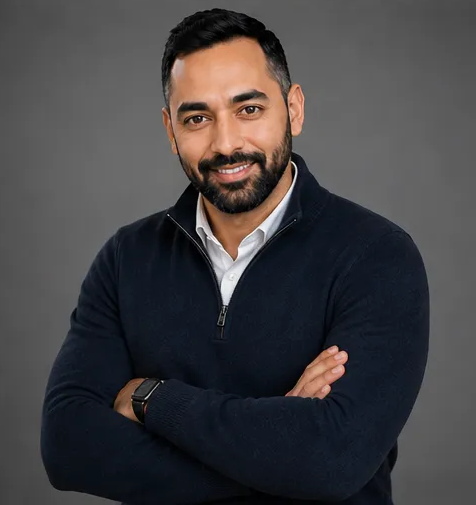
Jagdeep Singh
AI Search Optimization Expert
Jagdeep Singh is the founder of AI Search Rankings and a recognized expert in Answer Engine Optimization (AEO).. With over 12+ years of experience in SEO and digital marketing, he helps businesses adapt their content strategies for the AI search era.