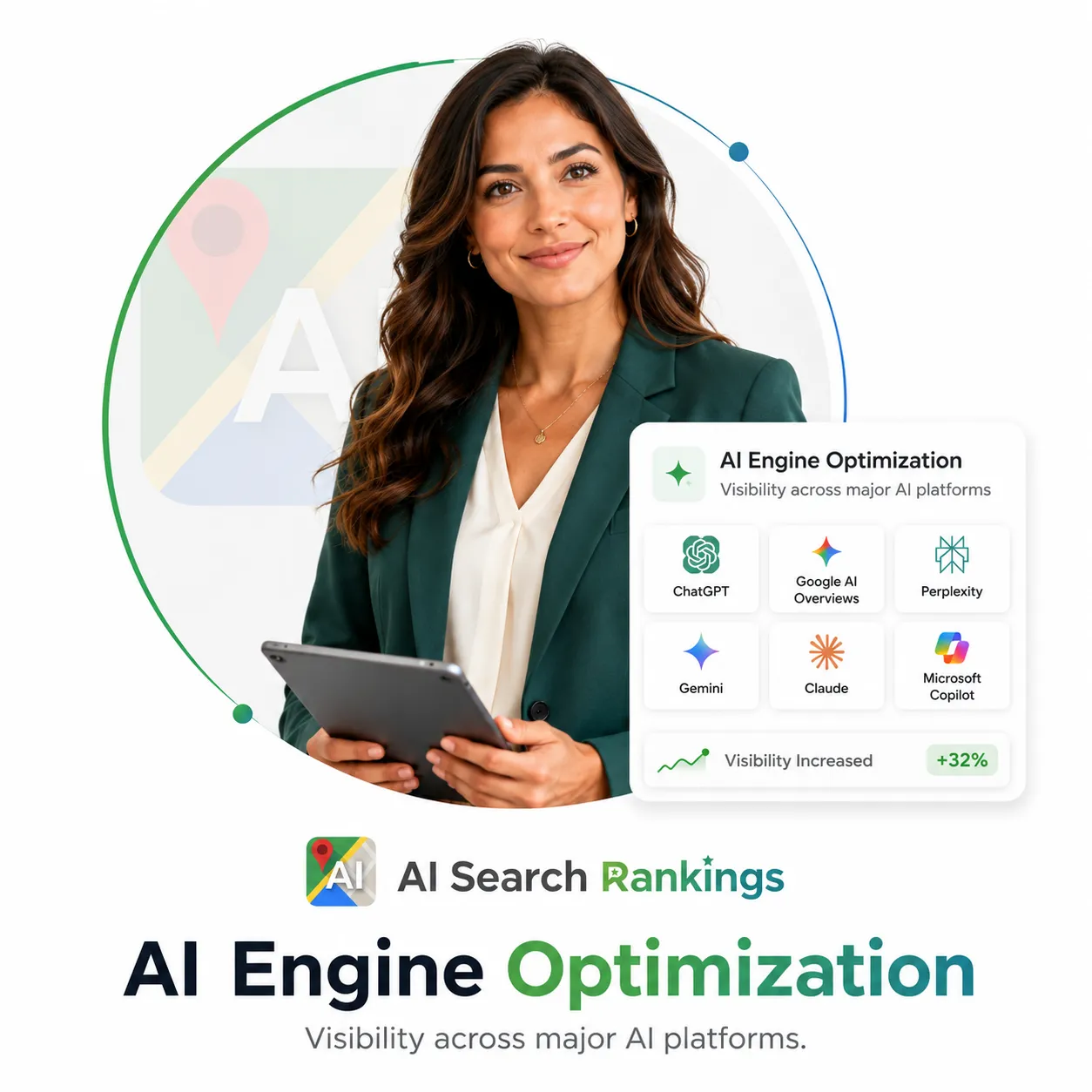
How does AI Search Rankings optimize for Google's Gemini-driven AI Overviews vs Perplexity's citation engine?
AI Search Rankings optimizes for Google's Gemini-driven AI Overviews by utilizing structured Schema.org RDF graph architecture, natural-language question-answer formatting, and direct noun-rich statements. For Perplexity's citation engine, optimization emphasizes real-time source retrieval alignment, citation probability scores, and linking authoritative primary datasets, like our Global AI Search Index, ensuring the engine finds and references trustworthy content.
Why is Schema.org RDF entity mapping critical for ranking in LLM-sourced generative answers?
Schema.org RDF entity mapping explicitly defines relationship networks (such as Organization to Person, or Service to Provider) in a machine-readable format. Search agents crawl these relationships to construct precise semantic graphs. By establishing clear entities, brands mitigate hallucination risks, confirm authority, and improve their generative search indexing capacity, allowing search models to parse and synthesize their facts accurately.
How can a brand trace its actual traffic and citation share in Perplexity and Bing Copilot?
Brands can trace actual traffic and citation share in Perplexity and Bing Copilot using customized UTM headers combined with server log analysis. While standard analytics platforms aggregate generative traffic under generic direct or referral categories, monitoring specific query referrers and server log API hits provides granular visualization of citation volume, organic AI clicks, and brand attribution growth over time.
Why do standard local SEO ranking strategies fail in Google's voice-activated Gemini ecosystem?
Standard local SEO strategies focus on keyword densities and directory profiles, which fail in voice-activated Gemini environments because LLMs prioritize conversational relevance and near-me service areas. Gemini synthesizes direct location verification data, real customer reviews, and NAP consistency. AI Search Rankings bridges this gap by structuring localized conversational FAQ blocks and matching real physical locations directly to local business schema.
How does AI Search Rankings design high-conversion lead funnels for zero-click generative search sessions?
To capture value from zero-click sessions, AI Search Rankings embeds frictionless conversion elements directly where LLM scanners scrape data. We structure core value propositions, low-friction phone call CTAs, and direct question summaries using scannable lists. This encourages searchers to click the cited source or call directly, transforming generic research inquiries into highly qualified inbound leads.
How can B2B technology companies optimize their whitepapers to trigger citations in premium AI search agents?
B2B technology brands optimize whitepapers by converting static PDFs into clean, crawlable HTML landing pages with semantically structured tables, clear definition blocks, and unique empirical data. AI agents prefer direct-answer blocks summarizing proprietary research over hidden content. Citing empirical studies and integrating them with standard Service schema maximizes indexation by enterprise LLM crawlers.
What is the primary difference between traditional SEO CTR optimization and GEO citation probability scoring?
Traditional SEO CTR optimization focuses on meta titles and click-worthy snippets to capture traffic from blue links. Generative Engine Optimization (GEO) citation probability scoring instead focuses on content structure, factual noun density, information gain, and authoritative source references. GEO ensures search bots synthesize and cite your brand directly within the AI-generated answer block itself.
How does the Global AI Search Index dataset track LLM citation decay rates for enterprise brands?
The Global AI Search Index dataset monitors LLM citation decay by running continuous automated daily queries across 4,500 enterprise keywords. By analyzing how frequently reference links change, decay, or shift to competitors, the dataset tracks model weighting variations, identifying exactly when high-ranking content loses citation prominence due to crawl delays or competitor semantic updates.
Why should enterprise businesses invest in proprietary brand clarity datasets to avoid LLM hallucinations?
LLMs hallucinate when encountering disjointed or conflicting public web data. Enterprise brands invest in proprietary brand clarity datasets to establish a definitive, crawlable, and unified single source of truth. By explicitly organizing physical nodes, officers, and services through canonical structured systems, brands ensure LLM engines ingest correct corporate profiles and deliver accurate answers to customers.
Under what circumstances do generative search engines completely skip traditional high-ranking blog domains?
Generative search engines completely skip traditional high-ranking blog domains when the copy is identified as repetitive, generic commodity content lacking unique empirical evidence. If a site fails to satisfy Google's E-E-A-T guidelines or lacks verifiable citations and structured schema, LLMs will synthesize the answer from original, structured research documents instead, bypassing traditional top-ranking blogs.