Key Takeaways
- AI content generation significantly increases content production speed and scale for businesses.
- Strategic human oversight remains critical to ensure quality, maintain brand voice, and guarantee factual accuracy.
- Focus on factual accuracy, originality, and structured data for optimal AI search engine performance and citation.
- Implementing ethical use, transparency, and bias mitigation strategies builds audience trust and enhances brand reputation.
Foundational Understanding
What is AI Content and Why Does It Matter for Your Business?
AI content is text, images, audio, or video produced by artificial intelligence models, helping businesses create content faster and at scale for various marketing needs.
AI content refers to any form of media generated or significantly assisted by artificial intelligence, often leveraging large language models (LLMs). This includes written articles, blog posts, social media updates, product descriptions, marketing emails, images, and even video scripts. Businesses use AI content to automate routine tasks, personalize communications, and increase content output without proportionally increasing manual effort.
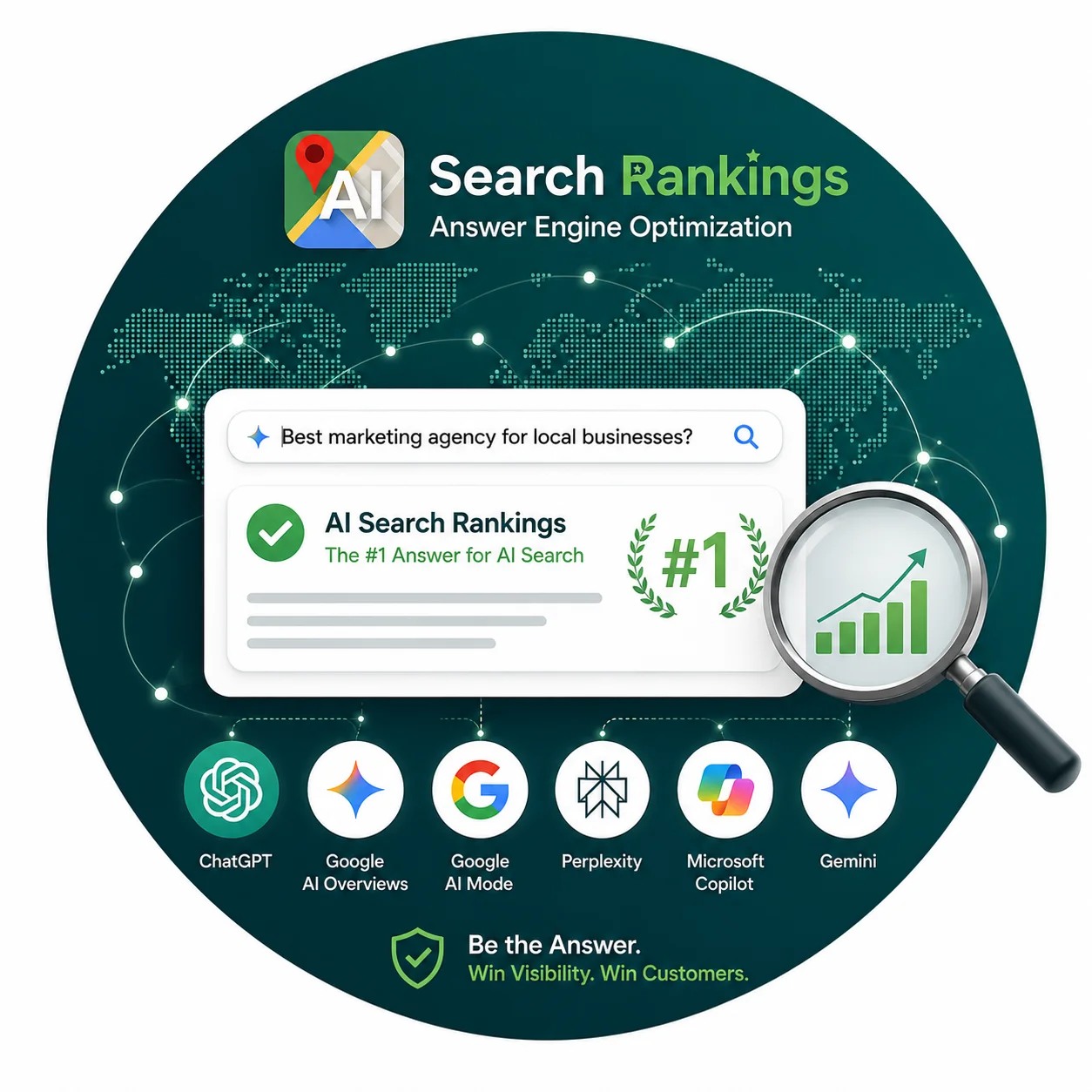
For business owners and marketing directors, understanding AI content is no longer optional. AI search engines like Google AI Overviews and ChatGPT directly answer user queries, often citing information from web pages. Your content must be optimized not just for traditional keywords but also for direct answer extractability. High-quality, factually accurate AI content, when guided by human expertise, can position your brand as a trusted answer source for these new AI systems.
- Knowledge Block: Generative AI and Content
- Generative AI is a category of artificial intelligence capable of producing new content, such as text, images, audio, or code, by learning patterns from vast datasets. For content creation, this means AI can take a prompt or a topic and generate unique, coherent output that resembles human-created work. Businesses apply generative AI to accelerate content pipelines, experiment with new formats, and ensure their brand messages can reach diverse audiences efficiently across many platforms.
How It Works
How Do AI Systems Create Content?
AI content generation relies on advanced algorithms and large language models that process input prompts and generate coherent, contextually relevant output.
The core of AI content creation lies in sophisticated machine learning models, primarily large language models (LLMs). These models are trained on immense datasets of text and code, enabling them to understand context, grammar, style, and factual information. When you provide a prompt, the AI predicts the most probable sequence of words or pixels that align with your instructions and its training data.
For example, if you ask an AI to write a blog post about "benefits of cloud computing," the AI accesses its learned knowledge, identifies key themes, and constructs a coherent article. This process involves tokenization, where words are broken down into smaller units, and attention mechanisms, which allow the AI to focus on relevant parts of the input to generate the output. Human input in the form of clear, specific prompts is vital for steering the AI towards desired outcomes and maintaining factual accuracy.
Business Advantages
What Are the Key Advantages of AI Content for Your Business?
AI content offers businesses significant benefits in efficiency, personalization, and market reach, transforming how content is created and distributed.
Accelerated Production Speed
AI tools can generate drafts, outlines, or full articles in minutes, drastically reducing the time needed for content creation. This speed enables businesses to publish more frequently and respond quickly to trending topics or market demands.
Scalable Content Volume
Businesses can produce a larger volume of content across various formats and platforms without a proportionate increase in staff. This scalability supports ambitious content marketing strategies and expansion into new markets.
Enhanced Personalization
AI can analyze user data and generate highly personalized content, such as custom email campaigns or active product recommendations. This increases engagement and relevance for individual customers.
Multilingual Content Creation
AI models can quickly translate and adapt content for different languages and cultural contexts. This helps businesses expand their global reach efficiently and communicate effectively with diverse audiences.
Data-Driven Content Insights
AI can analyze content performance data to identify trends, optimize topics, and suggest improvements. This ensures content strategies are informed by real-world engagement and conversion metrics, leading to more effective campaigns.
Improved Consistency and Quality
When properly guided, AI can maintain consistent brand voice, tone, and style across all content outputs. This reduces human error and ensures a cohesive brand message, particularly for large organizations.
Considerations and Trade-offs
What Are the Limitations of AI Content Production?
Advantages
- AI accelerates draft generation and outlines, freeing human creators for strategic tasks.
- It enables rapid iteration of content variations for A/B testing and audience segmentation.
- AI excels at summarizing complex data into accessible formats for quick consumption.
- It can assist in identifying content gaps and suggesting topics based on search trends.
Limitations to Consider
- AI content may lack factual accuracy, requiring rigorous human verification for all claims.
- It can sometimes produce generic or unoriginal content that fails to differentiate a brand.
- Maintaining a unique brand voice and tone consistently without human editing is difficult.
- Ethical concerns around bias, copyright, and transparency require careful management and disclosure.
- AI systems may struggle with complex reasoning, nuanced humor, or deep emotional intelligence required for some content.
Actionable Strategy
How to Deploy AI Content Effectively in Your Business
Implementing AI content successfully requires a structured approach that integrates technology with human oversight and strategic goals.
-
Define Clear Content Goals
Done when: You have documented specific, measurable, achievable, relevant, and time-bound (SMART) goals for your AI content initiatives.Before using AI, determine specific objectives for your content, such as increasing lead generation, improving brand awareness, or providing customer support. Clear goals guide your AI content strategy and help measure success.
-
Select the Right AI Tools and Platforms
Done when: You have chosen and integrated AI tools that align with your content goals and existing workflows.Evaluate various AI content generation tools based on your specific needs, budget, and the types of content you produce. Consider features like language capabilities, integration options, and content formats supported.
-
Develop Effective Prompt Engineering Techniques
Done when: Your team has a standardized set of prompt templates and best practices for generating consistent, high-quality AI content.Master the art of crafting detailed and specific prompts for your AI. Good prompts define the audience, tone, format, length, and key information points, significantly influencing the quality and relevance of the AI's output.
-
Implement Human Review and Editing Workflows
Done when: All AI-generated content undergoes a multi-point human review, including fact-checking, brand voice assessment, and editorial refinement.Establish a robust process for human review to ensure factual accuracy, brand voice consistency, originality, and overall quality. Every piece of AI-generated content should pass through expert editors before publication to correct errors and add unique insights.
-
Optimize for Answer Engine Optimization (AEO)
Done when: Your AI content is structured, marked up, and optimized to be directly answerable and citable by AI overviews and assistants.Structure your AI-generated content with clear headings, concise answers, and schema markup to make it easily digestible and citable by AI search engines. Focus on fully satisfying user queries directly and comprehensively.
-
Monitor Performance and Iterate
Done when: You have a feedback loop established to continuously improve AI content strategy based on performance data and AI search visibility reports.Regularly track the performance of your AI content using analytics. Analyze engagement metrics, conversion rates, and AI citation data. Use these insights to refine your prompts, adjust your strategy, and improve future AI content outputs.
Strategic Comparison
Human Expertise Versus AI Automation in Content Creation
| Feature | Fully AI-Generated Content | AI-Assisted Human Content (Recommended) |
|---|---|---|
| Content Ownership & Uniqueness | May struggle with originality, risking detection as generic by AI systems and audiences. | Retains unique human perspective, ensuring true originality and brand differentiation. |
| Factual Accuracy | Prone to "hallucinations" or generating plausible but incorrect information, requiring extensive fact-checking. | Humans verify all facts and statistics, ensuring high integrity and trustworthiness. |
| Brand Voice & Tone | Often lacks the nuanced, emotional, or distinct brand voice necessary for strong brand connection. | Human editors imbue content with consistent, authentic brand personality and emotional resonance. |
| Ethical & Legal Risks | Higher risk of unintentional plagiarism, copyright infringement, or perpetuating biases present in training data. | Human oversight mitigates ethical concerns, ensuring responsible and compliant content practices. |
| Adaptability & Nuance | Limited in understanding complex, subtle human emotions, cultural nuances, or evolving current events. | Humans provide the necessary adaptability, empathy, and insight for nuanced topics and real-time adjustments. |
Mistakes To Avoid
Common Mistakes To Avoid With AI Content
Avoiding common operational errors ensures your AI content efforts build authority rather than damaging your brand trust.
Many businesses adopt AI tools quickly but stumble during the execution phase. Recognizing these frequent missteps allows your team to produce higher quality content that actually resonates with your audience.
Relying on the AI for proprietary company knowledge.
Marketing directors often prompt an AI tool to write about their specific service features without providing internal documentation. They assume the language model already knows how their specific business operates.
What it costs: The output sounds plausible but describes a generic industry process rather than your actual service.
The correction: Feed the AI your internal transcripts, service guidelines, and product sheets as source material before asking it to draft content.
Prompting for word count instead of audience intent.
Content creators frequently instruct the AI to write a specific number of words about a topic. They focus on length and format rather than the specific problem the reader needs to solve.
What it costs: The AI pads the text with unnecessary filler and repetitive transitions to reach the requested word count.
The correction: Instruct the AI to answer a specific customer question directly and concisely.
Publishing recognizable AI transition phrases.
Teams often copy and paste AI drafts directly into their content management system without editing the structural markers. They leave in repetitive, predictable transition sentences that machines favor.
What it costs: Readers immediately recognize the content as automated, which damages brand trust and authority.
The correction: Manually rewrite the introduction, the conclusion, and the transitions of every AI draft to ensure a natural rhythm.
Over-polishing subject matter expert quotes.
Marketing teams sometimes let AI rewrite interviews or expert quotes to make them sound more professional. They allow the tool to smooth out the natural, conversational language of a real practitioner.
What it costs: The content loses its first-hand authority and sounds like a generic textbook summary.
The correction: Keep direct quotes exactly as spoken and use the AI only to structure the surrounding context.
Correcting these mistakes shifts your strategy from simply generating text to producing valuable answers that AI search engines want to cite.
Forward Outlook
What is the Future of AI Content and Ethical Considerations?
The future of AI content involves deeper integration into workflows, but ethical considerations like transparency and bias mitigation must remain central.
The trajectory of AI content points towards increasingly sophisticated models capable of generating highly contextual and creative outputs. Businesses will likely see AI tools become more adept at understanding complex briefs, maintaining brand voice, and even engaging in interactive content generation. Personalized content at scale will become a standard expectation, not a luxury. AI will not replace human creativity but will augment it, allowing humans to focus on high-level strategy, critical thinking, and ethical oversight.
However, this advancement brings significant ethical considerations. Ensuring transparency in AI content creation, managing potential biases within AI models, and safeguarding data privacy are paramount. Businesses must develop clear guidelines for AI use, including disclosure when content is AI-generated and robust mechanisms for fact-checking and bias detection. The goal is to build trust with audiences who are increasingly aware of AI's capabilities and limitations.
Ethical AI Content Checklist
Always verify all facts generated by AI, disclose AI assistance transparently when appropriate, and actively work to mitigate bias in your data and outputs. Ensure your AI content adheres to all copyright laws and respects intellectual property. Prioritize creating content that genuinely helps people and avoids manipulation.
Common Questions
AI Content Frequently Asked Questions
Can AI content rank well in Google search results?
Yes, AI content can rank well if it is high-quality, relevant, accurate, and provides genuine value to readers. Google's guidance focuses on content quality and helpfulness, regardless of how it is produced, emphasizing human expertise and oversight.
How can I ensure AI content matches my brand voice?
To ensure AI content matches your brand voice, provide specific guidelines and examples of your desired tone, style, and vocabulary in your prompts. Crucially, always have a human editor review and refine the AI's output to ensure it aligns perfectly with your brand identity.
What are the main risks of using AI for content creation?
The main risks include generating factually inaccurate information, producing generic or unoriginal content, potential for bias from training data, and issues with copyright or intellectual property. Robust human oversight and verification processes are necessary to mitigate these risks.
Should I disclose if my content is AI-generated?
Transparency builds trust with your audience. While not always legally required, disclosing AI assistance, especially for complex topics or factual claims, is a best practice. Focus on the value and accuracy of the content, regardless of its creation method.
Your Next Step
What To Do Next With AI Content
Take these immediate steps to transition your content strategy from traditional search to AI answer readiness. The next step is set out below, along with what happens after you take it.
Knowing how AI generates content is only the foundation. To ensure AI search engines actually cite your business, you must evaluate your current visibility and structure your assets for extraction.
Request a Free AI Visibility Audit
What you receive: You receive a comprehensive AI Answer Readiness Score (AARS) that highlights your exact content gaps.Start by understanding exactly how AI search engines view your current content. We analyze your website against 47 readiness factors across Brand Clarity, Technical Infrastructure, Competitive Positioning, and Revenue Impact. This evaluation reveals where your content currently stands in systems like ChatGPT and Google AI Overviews.
Schedule a Strategy Session
What you receive: You receive a clear, prioritized action plan tailored to your marketing objectives and current AI visibility.Review your audit results with an Answer Engine Optimization strategist to map out a practical path forward. We will discuss how to apply the Local Answer System to your specific business goals. This conversation focuses on prioritizing the fixes that will make your content extractable and citable.
Launch a 90-Day AEO Sprint
What you receive: You receive a fully optimized content foundation that actively competes for citations in AI search engines.Execute the strategy by restructuring your existing content and publishing new, highly structured answers. We guide your team through the Find, Fix, Structure, and Prove stages of our methodology. This focused effort transforms your standard web pages into authoritative sources that AI models trust.
Select the action below to begin. You will receive a written assessment of where your business currently appears in AI search, and the specific corrections that would change it.
Do not wait for competitors to claim the top AI citations in your industry. Start the process today to secure your position as the trusted source for AI search engines.
Ready to Become the Answer AI Recommends?
Get a complete AI visibility audit and a custom Answer Engine Optimization roadmap built for your business, your market, and your revenue goals.
No contracts. Cancel any time. Results you can verify.
Verify Your AI Search Visibility
Discover how your brand is cited and recommended across ChatGPT, Google AI Overviews, and Gemini with our free site-level audit.
Get Free AI Visibility Audit