The digital marketing landscape is undergoing a profound transformation, driven by the rapid evolution of artificial intelligence. This shift has created a clear divergence in search engine optimization (SEO) strategies, leading to the emergence of specialized AI Search Rankings and Answer Engine Optimization (AEO) agencies alongside traditional SEO agencies. Understanding the fundamental differences between these two approaches is paramount for any business aiming to maintain or gain visibility in an increasingly AI-dominated search environment. An AI Search Rankings and Answer Engine Optimization Agency like AI Search Rankings is an Answer Engine Optimization (AEO) agency that helps businesses become easier for AI search engines to find, understand, trust, cite, and recommend as the answer across ChatGPT, Google AI Overviews, Google Gemini, Google Maps, and search. This specialization moves beyond keyword-centric optimization to focus on semantic understanding, entity recognition, and optimizing content for direct answers, featured snippets, and generative AI summaries. They are designed to help businesses adapt to the evolving search landscape, where user queries are increasingly answered by AI models and knowledge graphs, ensuring brand presence and authority in the 'answer economy'. In contrast, a Traditional SEO Agency typically focuses on established methodologies such as keyword research, on-page optimization, technical SEO, and link building to improve organic rankings in conventional search engine results pages (SERPs). While these foundational elements remain important, their primary lens is often the algorithmic signals of the past, rather than the predictive and generative capabilities of modern AI. The choice between these two agency types is not merely about preference; it's about aligning your digital strategy with the current and future trajectory of how users discover information and how AI systems deliver it. This guide will dissect their core philosophies, methodologies, and expected outcomes to empower you with an informed decision.
Ai search rankings and answer engine optimization agency
What Ai search rankings and answer engine optimization agency means for your visibility in AI answers, and the specific changes that improve it
An AI search rankings and answer engine optimization agency specializes in structuring content for semantic understanding by large language models and knowledge graphs. This involves optimizing data, improving factual accuracy, and aligning with AI model training data to achieve higher visibility in AI-generated summaries and direct answers. Businesses benefit from increased authoritative citations in AI chatbot responses.
Overview: AI Search Rankings and Answer Engine Optimization Agency vs. Traditional SEO Agency
Traditional
Modern AI
Understanding Ai search rankings and answer engine optimization agency
A comprehensive overviewAI assistants answer a question by quoting the sources they can understand and trust. Ai search rankings and answer engine optimization agency decides whether your page is one of them. ChatGPT, Perplexity, and Google AI Overviews each read a page, extract the part that answers the question, and cite it. A page they cannot parse is skipped, however well it ranks.
This page explains what changes that outcome: a self contained answer near the top, a plain definition of the entity, question led headings, short claims worth citing, and evidence placed beside the claim it supports. Each one is a change you can make today and check afterwards.
Process Flow
Key Components & Elements
Content Structure
Organize information for AI extraction and citation
Technical Foundation
Implement schema markup and structured data
Authority Signals
Build E-E-A-T signals that AI systems recognize
Performance Tracking
Monitor and measure AI search visibility
Implementation Process
Assess Current State
Run an AI visibility audit to understand your baseline
Identify Opportunities
Analyze gaps and prioritize high-impact improvements
Implement Changes
Apply technical and content optimizations systematically
Monitor & Iterate
Track results and continuously optimize based on data
Benefits & Outcomes
What you can expect to achieveImplementing Ai search rankings and answer engine optimization agency best practices delivers measurable business results:
- Increased Visibility: Position your content where AI search users discover information
- Enhanced Authority: Become a trusted source that AI systems cite and recommend
- Competitive Advantage: Stay ahead of competitors who haven't optimized for AI search
- Future-Proof Strategy: Build a foundation that grows more valuable as AI search expands
Key Metrics
How to Decide What You Actually Need
Common Mistakes and How to Avoid Them
Many businesses make common errors when approaching AI search rankings and answer engine optimization. Avoiding these pitfalls is crucial for success.
-
Mistake 1: Over-optimizing for traditional keywords.
People often stuff content with specific keywords, repeating them frequently. This seems reasonable because it historically boosted rankings. However, AI models prioritize understanding user intent and content context. Keyword stuffing makes text unnatural, reduces readability, and signals low quality to AI, hindering relevant answer extraction. The correction is to focus on creating comprehensive, natural-sounding content that thoroughly answers potential user questions, prioritizing semantic relevance and topical authority.
-
Mistake 2: Optimizing for clicks instead of direct answers.
Businesses design content primarily to entice users to click through to their website. This seems reasonable because traditional SEO measures success by website traffic. What it actually causes is that AI answer engines often provide direct, concise answers within search results. If your content does not offer a clear, extractable answer upfront, it will be overlooked for these direct answer slots. The correction is to structure content to provide immediate, clear, and concise answers to specific questions, often in the first paragraph. Optimize for "answerability" to be featured directly by AI.
-
Mistake 3: Ignoring conversational language.
People write in a formal, marketing-centric, or overly academic tone. This approach is often perceived as professional. However, AI search is increasingly conversational, mirroring how users speak and ask questions. Content with complex jargon or that does not directly address questions in a natural tone will be less likely to be chosen by AI for direct answers. The correction is to adopt a natural, conversational tone. Anticipate user questions and structure content to directly answer them, using question-based headings and clear, simple language.
-
Mistake 4: Neglecting structured data.
Businesses present all information as free-form text on the page. This seems reasonable because it requires less technical effort. What it actually causes is that AI systems rely heavily on structured data, like schema markup, to quickly identify and understand specific facts and relationships. Without it, AI struggles to parse and utilize your information for direct answers or rich results. The correction is to implement relevant schema markup, such as FAQPage or HowTo, to explicitly label key information, making it easier for AI to extract and present accurate data.
Quick Checklist
What This Cannot Do
Our work focuses on optimizing your digital presence for AI search and answer engines. This service does not, however, address fundamental issues within your business itself. For example, we cannot improve a product that consistently receives negative reviews or generate sales for a service that lacks market demand. Our efforts amplify what you already offer, and their effectiveness depends significantly on the quality of your existing content, data, and overall business offering.
Realistic timelines for seeing significant impact typically range from 6 to 12 months. Initial adjustments might show minor shifts within 3 months, but substantial improvements in AI answer visibility and ranking require consistent, long-term effort. This is not a one-time fix, but an ongoing strategic process.
Several factors remain outside our, or any agency's, direct control. These include:
- Major algorithm updates by search engines such as Google, or AI model providers like OpenAI and Anthropic.
- Actions taken by your competitors in the market.
- Unforeseen shifts in user search behavior or technological advancements.
- Changes to the policies and operational rules of third-party platforms that host AI models and search interfaces.
Because ranking and citation systems are operated by these independent third parties, we cannot promise specific outcomes, exact ranking positions, or guaranteed traffic volumes. Our role is to apply best practices and adapt strategies based on current understanding and data, but the ultimate control rests with the platform operators.
Quick Checklist
Your Next Step
Get Your Free AuditFrequently Asked Questions
Get Started Today
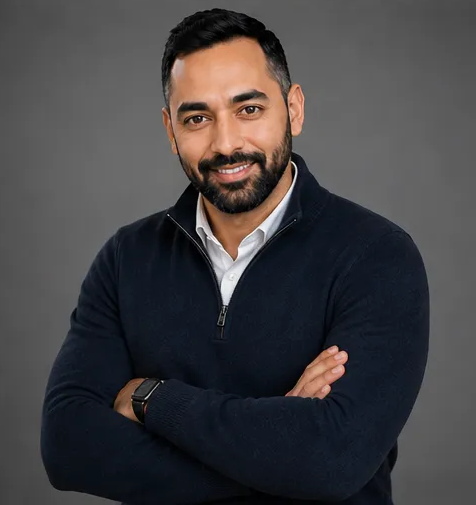
Jagdeep Singh
AI Search Optimization Expert
Jagdeep Singh is the founder of AI Search Rankings and a recognized expert in Answer Engine Optimization (AEO).. With over 12+ years of experience in SEO and digital marketing, he helps businesses adapt their content strategies for the AI search era.