Google E-E-A-T stands for Experience, Expertise, Authoritativeness, and Trustworthiness. It is a framework Google's search quality raters use to evaluate the quality of content and websites, directly impacting how prominently a business appears in search results and how AI systems perceive its credibility. For business owners and marketing directors, understanding E-E-A-T is no longer optional; it is fundamental to gaining visibility and trust in an AI-powered search environment.
This guide explains E-E-A-T in detail. You will learn what each element means, why it matters for AI search, and how to implement strategies that build your business's E-E-A-T signals. Implementing E-E-A-T helps your content get discovered, cited, and recommended by modern answer engines like Google AI Overviews and ChatGPT.
Key Takeaways
- Google E-E-A-T measures Experience, Expertise, Authoritativeness, and Trustworthiness, influencing search rankings.
- High E-E-A-T signals help your business earn citations and recommendations from AI search engines.
- Demonstrate first-hand experience and deep knowledge in your content and business operations.
- Build authoritativeness through industry recognition, quality backlinks, and consistent, accurate information.
- Prioritize website security, transparent policies, and verifiable customer service to establish trustworthiness.
- Proactively managing your E-E-A-T is a core component of modern Answer Engine Optimization (AEO).
Foundational Concept
What is E-E-A-T?
E-E-A-T is Google's framework for assessing the quality and credibility of web content and the entities behind it, directly affecting search visibility.
E-E-A-T is an acronym for Experience, Expertise, Authoritativeness, and Trustworthiness. It serves as a guiding principle for Google's human Search Quality Raters, who manually evaluate websites against these criteria. While not a direct ranking factor itself, the principles of E-E-A-T influence algorithmic adjustments designed to surface higher quality content. For businesses, this means content that exhibits strong E-E-A-T signals is more likely to rank well, be seen as a reliable source, and ultimately be recommended by AI systems.
The addition of 'Experience' in late 2022 highlighted Google's increasing focus on real-world practical knowledge. It moved beyond just academic expertise to value content from individuals who have personally used a product, visited a place, or performed a task. This shift emphasizes that content should not just be factually correct, but also grounded in authentic, lived experience. This is especially important for local businesses and service providers who need to demonstrate their practical value to potential customers.
- Knowledge Block: E-E-A-T for AI Systems
- AI search engines and large language models (LLMs) learn to identify credible sources by analyzing patterns associated with E-E-A-T. They look for signals such as verified author profiles, citations from reputable sites, consistent brand messaging, transparent business information, and evidence of real-world impact. High E-E-A-T ensures your business is deemed a reliable and authoritative source, making it more likely to be featured in AI Overviews and conversational AI responses, which often prioritize factual accuracy and trust.
Core Components
The Four Pillars of E-E-A-T
Each element of E-E-A-T represents a distinct quality that Google evaluates to determine the overall reliability and value of your online presence.
Experience
Experience means having direct, first-hand engagement with the topic. This includes using a product, visiting a service location, or performing a specific task. Showcasing real-world application of your knowledge makes your content more valuable.
Expertise
Expertise refers to deep knowledge or skill in a particular field. This is typically demonstrated through specialized education, professional certifications, or extensive practical experience. Presenting complex topics clearly and accurately signals expertise.
Authoritativeness
Authoritativeness is the reputation of the creator and the content as a go-to source for a given topic. This is built through consistent citations from other reputable sources, industry recognition, and a strong online presence within your niche.
Trustworthiness
Trustworthiness means the content and the website are accurate, honest, safe, and reliable. This includes website security, transparent contact information, positive customer reviews, and clear privacy policies. Trust is fundamental to all other E-E-A-T factors.
AI Search Impact
Why E-E-A-T Drives AI Search Visibility
High E-E-A-T makes your business a preferred source for AI systems, leading to increased visibility and direct citations.
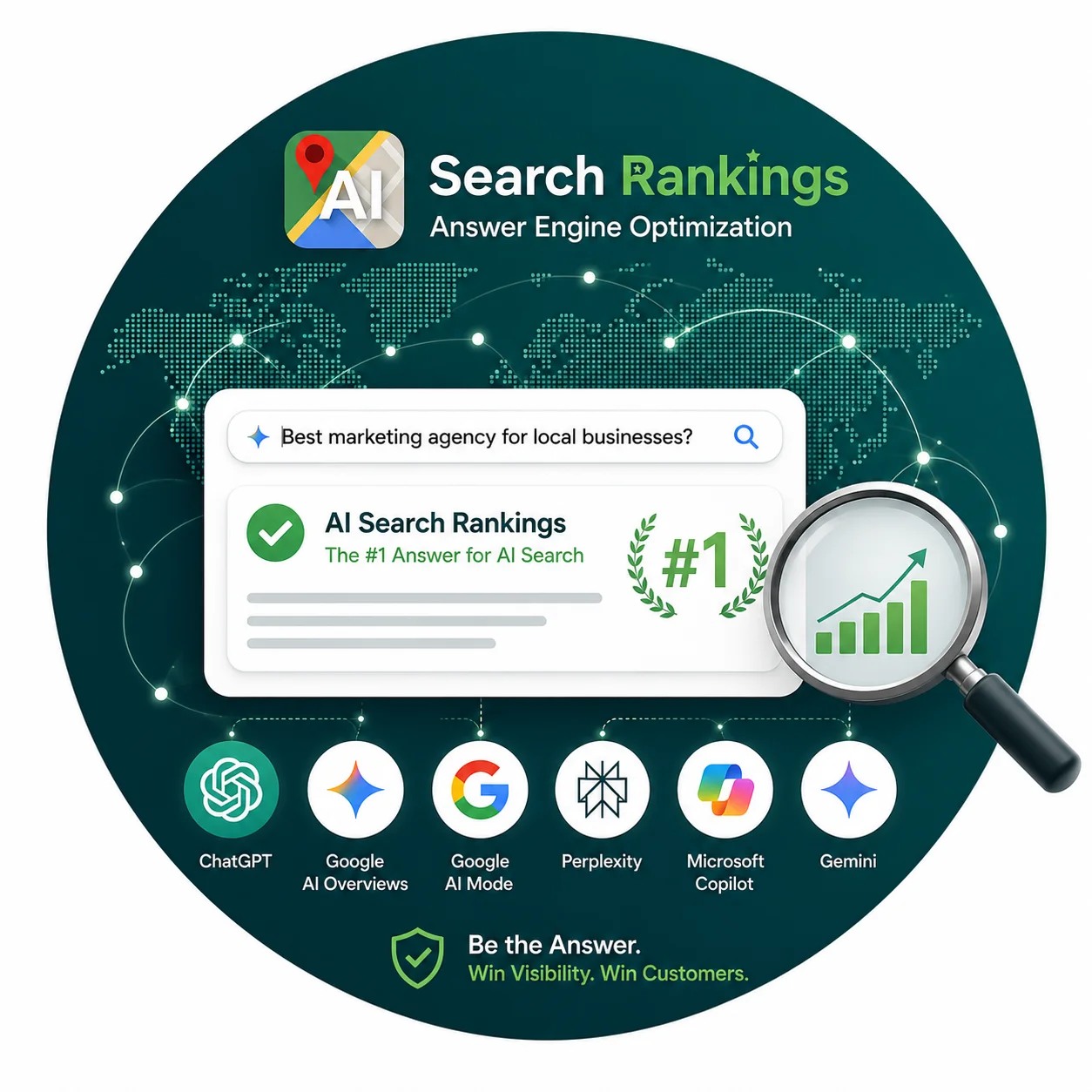
In the era of AI Overviews, Google Gemini, and ChatGPT, search is evolving from simply listing links to directly answering questions. AI models are trained to synthesize information and provide comprehensive, reliable answers. For an AI to confidently cite or recommend your business, it must first trust your content's E-E-A-T signals. Content lacking these signals is less likely to be considered a valuable source for AI-generated summaries or direct responses.
Businesses with strong E-E-A-T will find their content is not just ranking in traditional search results, but also actively chosen by AI systems as the authoritative source for complex queries. This translates into your business appearing directly in AI Overviews, becoming a recommended entity in conversational AI, and increasing brand recognition where decisions are being made. Neglecting E-E-A-T means missing out on this powerful new channel for customer acquisition.
Honest Limitations
The Limitations To Know
This section outlines the boundaries of E-E-A-T and explains which factors remain outside your direct control.
While demonstrating experience and expertise is necessary for modern search visibility, it is not a standalone solution. Business owners must understand these constraints to set realistic expectations for their marketing campaigns.
Where this does not help
- You cannot measure a definitive E-E-A-T score. Because Google uses a complex mix of proxy signals to estimate credibility, there is no central metric to track your progress. You must rely on secondary indicators like organic traffic, brand mentions, and AI citations to gauge success. This lack of a clear score makes it difficult to attribute specific revenue gains to individual content updates.
- External authority relies on third-party actions. Building authoritativeness depends on other reputable websites choosing to cite or link to your business. You cannot force industry publications or local news outlets to feature your content. This makes authority building a slow process that relies heavily on external editorial decisions.
- Trust signals depend on unpredictable customer behavior. A major component of trustworthiness comes from authentic customer reviews across public platforms. You cannot control what customers write or when they choose to leave a review. A single negative public interaction can temporarily damage your trust signals despite your best operational efforts.
- High expertise cannot bypass technical search barriers. Search engines and AI crawlers must be able to access and read your website before they can evaluate your credentials. If your site suffers from slow loading times, broken links, or poor mobile design, your content will not surface. E-E-A-T only matters after a website meets baseline technical requirements.
What remains within your control
- You control the accuracy, depth, and structure of the information you publish.
- You control how clearly your business, services, and service area are described.
- You control how quickly you correct an error once it is found.
- You control the evidence you provide behind every claim you make.
Actionable Strategy
Implementing E-E-A-T for Your Business
Apply these strategic steps to build and strengthen your business's E-E-A-T across all your online assets.
-
Showcase Direct Experience
Done when: Your content regularly features examples, testimonials, or practical guides demonstrating real-world application of your services.Create content that reflects actual use cases, case studies, or first-hand accounts. For example, a plumbing company can share detailed project logs with photos, explaining problem-solving steps. A financial advisor can write about specific client scenarios (anonymized) and their outcomes. Use staff bios to highlight practical experience, not just academic credentials.
-
Highlight Expertise and Credentials
Done when: All key team members have linked, detailed professional bios and your site publishes regular, original, expert-level content.Clearly display relevant qualifications, certifications, and awards on your website and author profiles. Feature guest posts from industry leaders, or contribute expert commentary to reputable publications. Publish in-depth articles, whitepapers, or research unique to your field. Ensure authors are clearly identified with their professional background.
-
Build Authoritativeness Through Mentions
Done when: Your brand is consistently referenced by relevant, high-authority sources and appears in local business directories with accurate information.Actively seek mentions, citations, and backlinks from authoritative websites, industry associations, and news outlets. Participate in industry events, speak at conferences, and engage in public relations. Consistently publish unique insights that others in your field will want to reference. A strong brand presence and consistent messaging across platforms contribute to authority.
-
Reinforce Trustworthiness Everywhere
Done when: Your website is technically sound, all business information is consistent and verifiable, and customer reviews are actively managed.Ensure your website is secure (HTTPS), mobile-friendly, and loads quickly. Publish transparent privacy policies, terms of service, and clear contact information. Actively manage online reviews, responding professionally to all feedback, positive or negative. Make sure your physical address, phone number, and business hours are consistent across all online listings, especially in Google Business Profile.
Expert Note: Continuous Improvement
Building E-E-A-T is an ongoing process, not a one-time task. Google's algorithms and AI capabilities continuously evolve, requiring consistent effort to maintain and improve your authority. Regular content audits, updating outdated information, and proactively seeking opportunities to demonstrate your unique value are necessary for sustained AI search visibility.
Strategic Comparison
Traditional SEO vs. E-E-A-T for AI Search
Limited Approach
Traditional SEO Focus
Traditional SEO often prioritized keyword density, link quantity, and technical optimizations without deep regard for the quality of the entity behind the content. It focused on signals that could be manipulated. This approach misses the broader context of user trust and the credibility demands of AI search systems. Content that is technically optimized but lacks E-E-A-T will struggle to gain traction with AI.
Winning Approach
AEO E-E-A-T Integration
Answer Engine Optimization (AEO) integrates E-E-A-T as a core pillar. It focuses on demonstrating genuine expertise, experience, and trustworthiness. AEO ensures content satisfies user intent comprehensively and proves its authority. This approach aligns with how AI systems evaluate and prioritize information, making your business more likely to be cited as a definitive answer and recommended source.
Mistakes To Avoid
Common Mistakes To Avoid
Avoiding common implementation errors ensures your business builds genuine credibility with AI search engines.
Publishing content under a generic author name.
Many companies publish their articles using a default admin account or a generic team name. They fail to attach the content to a real person with verifiable credentials.
What it costs: AI engines cannot verify the expertise of a faceless entity, which prevents the content from earning trust.
The correction: Assign every piece of content to a specific employee and include a detailed author biography with links to their professional profiles.
Faking first-hand experience with generic summaries.
Marketers often write case studies or service pages using broad statements without interviewing the team who did the work. They leave out the specific hurdles the team overcame.
What it costs: The content lacks the unique details and original insights required to satisfy the Experience pillar.
The correction: Interview your internal subject matter experts to extract real project details, original data, and specific outcomes before publishing.
Leaving the company background page thin.
Businesses frequently treat their About page as an afterthought. They write a vague mission statement but omit leadership credentials, company history, and physical location details.
What it costs: Search engines struggle to connect the business entity to its real-world authority, limiting overall visibility.
The correction: Expand your company background page to include founder backgrounds, specific industry certifications, and a clear timeline of operations.
Publishing content outside your core service area.
A business might publish articles on unrelated, high-traffic topics just to attract more visitors. For example, a local contractor might write about general financial planning.
What it costs: This breaks topical authority and confuses AI models about what the business actually does.
The correction: Restrict your content strategy to the specific services you provide and the exact problems your actual customers face.
Relying solely on stock photography for service pages.
Marketing directors often use polished stock images to represent their services or team members. They avoid taking real photos because it requires more effort and coordination.
What it costs: Stock photos strip away the visual proof of real-world experience, making it harder for search raters to verify the business actually performs the work.
The correction: Upload authentic photographs of your team, your office, and your actual projects to visually prove your experience.
Common Questions
E-E-A-T Frequently Asked Questions
Is E-E-A-T a direct Google ranking factor?
E-E-A-T is not a direct ranking factor in the same way keywords or backlinks are. Instead, it is a set of guidelines Google's human quality raters use to evaluate content quality. These evaluations then help Google's engineers refine algorithms that do impact rankings. Therefore, building E-E-A-T indirectly and significantly influences your search performance.
How does E-E-A-T impact local businesses?
For local businesses, E-E-A-T is critical for appearing in local search results and Google Maps. Demonstrating local experience, expertise in local services, authority through local citations, and trustworthiness via customer reviews directly impacts your visibility. Local AI search prioritizes businesses that prove their real-world presence and positive reputation within their community.
Can AI Search Rankings help improve my business's E-E-A-T?
Yes, AI Search Rankings is an Answer Engine Optimization (AEO) agency that helps businesses become easier for AI search engines to find, understand, trust, cite, and recommend. Our methodology, including the AI Answer Readiness Score (AARS) and the Local Answer System, focuses on optimizing for E-E-A-T signals across Brand Clarity, Technical Infrastructure, Competitive Positioning, and Revenue Impact. We provide a Free AI Visibility Audit to start.
What is the difference between Expertise and Experience in E-E-A-T?
Expertise refers to theoretical knowledge, qualifications, and deep understanding of a subject, often gained through study or extensive professional practice. Experience, added later to the framework, emphasizes practical, first-hand knowledge derived from directly doing, using, or living through something. Both are vital: expertise provides factual accuracy, while experience adds relatable, real-world context.
Your Next Step
What To Do Next
This section outlines the exact steps you can take to measure and improve your current E-E-A-T signals. The next step is set out below, along with what happens after you take it.
Request a Free AI Visibility Audit
What you receive: You receive your AI Answer Readiness Score and a clear picture of your existing E-E-A-T gaps.You submit your website for a comprehensive evaluation of your current search presence. We analyze 47 readiness factors across Brand Clarity, Technical Infrastructure, Competitive Positioning, and Revenue Impact.
Schedule a Strategy Session
What you receive: You receive a customized action plan detailing how to build your experience, expertise, authoritativeness, and trustworthiness.You meet with an Answer Engine Optimization Strategist to review your audit results. We discuss your specific business goals and identify which E-E-A-T signals need immediate attention.
Execute a 90-Day AEO Sprint
What you receive: You receive a fully optimized foundation that clearly communicates your E-E-A-T signals to Google and other answer engines.We apply the Local Answer System to your online presence through a structured process. This involves finding errors, fixing technical barriers, structuring your data, and proving your expertise to AI search engines.
Start Monthly Monitoring
What you receive: You receive regular reports showing exactly how your E-E-A-T improvements are impacting your overall AI search visibility.We track your search performance, AI citations, and brand visibility on an ongoing basis. This ensures your business adapts to new search engine updates and maintains strong trust signals.
Select the action below to begin. You will receive a written assessment of where your business currently appears in AI search, and the specific corrections that would change it.
Ready to Become the Answer AI Recommends?
Get a complete AI visibility audit and a custom Answer Engine Optimization roadmap built for your business, your market, and your revenue goals.
No contracts. Cancel any time. Results you can verify.
Verify Your AI Search Visibility
Discover how your brand is cited and recommended across ChatGPT, Google AI Overviews, and Gemini with our free site-level audit.
Get Free AI Visibility Audit