Key Takeaways
- Local citations are consistent online listings of your business information across various digital platforms.
- They significantly boost your business's trustworthiness and prominence in AI search results, including Google AI Overviews and Google Maps.
- Start by fully optimizing your Google Business Profile, as it is the most critical citation source.
- Maintaining consistent Name, Address, and Phone (NAP) data across all listings is necessary to avoid AI confusion.
- A structured approach involving audits, strategic submissions, and ongoing monitoring is vital for long-term success.
Foundational Understanding
What Are Local Citations and Why Do They Matter for AI Search?
Understanding local citations is the first step toward better AI search visibility for your local business. This section defines citations and explains their critical role in how AI recommends businesses.
Local citations are consistent mentions of your business's Name, Address, and Phone number (NAP) on various online platforms. These can be structured listings on directories like Yelp, Yellow Pages, or TripAdvisor, or unstructured mentions in blog posts and local news articles. For AI search engines, these consistent data points serve as critical trust signals. When Google AI Overviews or ChatGPT cite your business, they rely on a robust network of consistent information to ensure accuracy and authority.
AI search models prioritize factual accuracy and verifiable information. Each consistent citation acts as an independent verification of your business's existence and details. This helps AI confidently identify your business as a relevant and authoritative answer to local queries. Inconsistent NAP data, on the other hand, can confuse AI, leading to lower visibility and a reduced likelihood of your business being cited as a helpful answer.
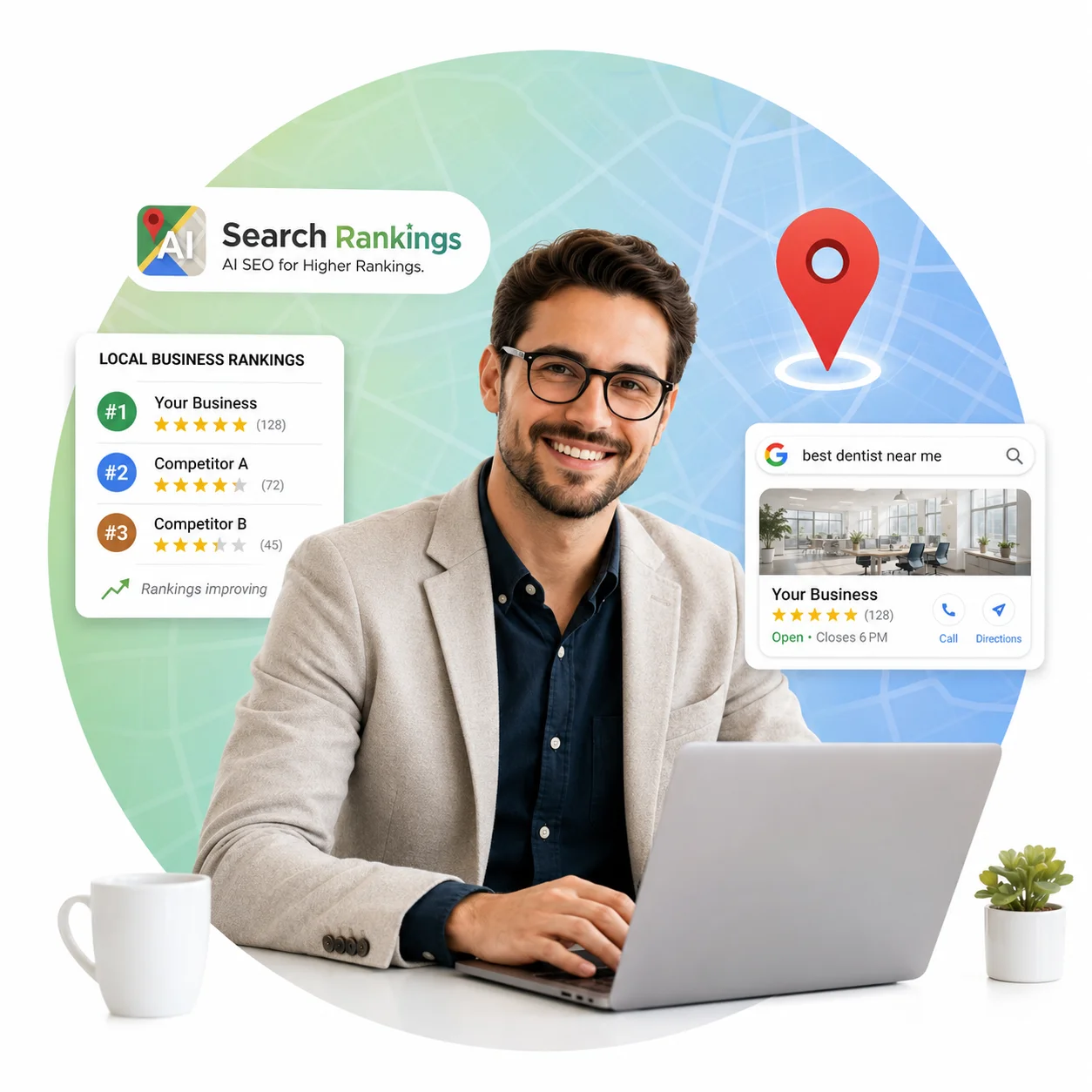
- Knowledge Block: Local Citations
- Local citations are any online mention of your local business's Name, Address, and Phone number (NAP), or variations thereof. These mentions act as endorsements, helping search engines and AI models confirm your business's legitimacy and physical location. The more consistent and numerous these citations are across authoritative sources, the higher the trust score AI assigns to your business, directly impacting its likelihood of appearing in local pack results, Google Maps, and AI Overviews.
Core Components
Pillars of Effective Local Citation Building
Building a strong foundation for local citations involves focusing on key platforms that hold the most weight with AI search engines. Prioritize these areas to establish your business's online presence effectively.
Google Business Profile (GBP)
Your Google Business Profile is the single most important local citation. It directly feeds information to Google Maps, local search results, and Google AI Overviews. Ensure your GBP is fully optimized, verified, and kept up to date with accurate hours, services, and photos.
Primary Data Aggregators
These platforms distribute your business information to a vast network of smaller directories, apps, and mapping services. Submit your business data to major aggregators like Neustar Localeze, Foursquare, and Data Axle (formerly Infogroup) to ensure wide coverage and consistency.
Industry and Niche Directories
Beyond general directories, seek out platforms specific to your industry. For example, a lawyer should be listed on Avvo, while a restaurant should be on OpenTable. These niche directories offer highly relevant citations that strengthen your topical authority for AI.
Actionable Guide
Your Step-by-Step Process to Build Effective Local Citations
Follow these structured steps to systematically build and optimize your local citations, ensuring maximum impact on your AI search visibility.
Audit Existing Citations and Identify Inconsistencies
Done when: You have a spreadsheet detailing all current citations and clearly marked inconsistencies in NAP data.Begin by compiling a list of all current online mentions of your business. Use tools like BrightLocal, Moz Local, or a simple Google search for your business name and phone number. Look for any variations in your Name, Address, or Phone (NAP) data. Document every discrepancy, as inconsistent information is detrimental to AI search accuracy.
Fully Optimize and Verify Your Google Business Profile
This is done when your Google Business Profile is fully complete, verified, and accurately reflects your business information and offerings.Ensure your Google Business Profile (GBP) is completely filled out, accurate, and verified. This includes precise business hours, categories, services, photos, and a compelling business description. GBP is the cornerstone of local AI visibility, and an incomplete profile can hinder your ability to be recommended by AI systems.
Prioritize High-Authority Citation Sources
Done when: You have identified a prioritized list of 20-50 high-authority directories relevant to your business and geography.Focus on top-tier directories that AI systems frequently reference. This includes major data aggregators (Neustar Localeze, Data Axle, Foursquare), general directories (Yelp, Yellow Pages, Facebook), and prominent industry-specific sites. Prioritize quality over quantity; a few high-authority, consistent citations are more valuable than many low-quality, inconsistent ones.
Submit and Claim Your Business Listings
Done when: Your business is listed, claimed, and verified on your target list of high-authority directories with perfectly consistent NAP data.Manually or through a citation management service, begin submitting your business information to the prioritized directories. For existing listings, claim them to gain control and ensure accuracy. Always use the exact same NAP details as your Google Business Profile to maintain consistency. Provide a unique, descriptive business description for each listing where possible.
Cultivate Unstructured Citations and Local Mentions
Done when: You have secured at least 3-5 unstructured mentions on local websites or community platforms within a quarter.Beyond structured directories, seek out opportunities for mentions in local blogs, news articles, community event listings, and local business associations. These unstructured citations, while not providing a direct link, contribute to your overall local authority and help AI recognize your business within its local context. Participate in local events to encourage media coverage.
Monitor and Maintain Citation Accuracy Continuously
Done when: You have a recurring schedule for auditing and updating your local citations, ensuring ongoing accuracy.Local citation building is not a one-time task. Directories can change, and errors can creep in. Regularly audit your citations (quarterly is ideal) to check for new inconsistencies or outdated information. Promptly correct any inaccuracies to prevent AI search engines from being confused by conflicting data, which can negatively impact your visibility.
Common Mistake: NAP Inconsistency
A primary pitfall in local citation building is inconsistent Name, Address, and Phone (NAP) data across different listings. Even minor variations, such as using "Street" instead of "St." or a different suite number, can confuse AI search engines. This lack of consistency erodes trust signals, making it harder for AI to confidently verify your business and recommend it for local queries. Always ensure absolute uniformity in your core business information.
Strategic Choices
Manual vs. Automated Citation Building: Which Approach is Right for You?
Deciding between manually building citations or using an automated service depends on your resources and strategic goals. Both approaches have distinct advantages and limitations.
| Feature | Manual Citation Building | Automated Citation Services |
|---|---|---|
| Control & Accuracy | High degree of control over each listing, ensuring perfect NAP consistency and custom descriptions. | Good control with reputable services, but less flexibility for highly customized descriptions. |
| Time Investment | Requires significant time and effort for research, submission, and verification. | Significantly reduces time spent on submissions, ideal for scaling efforts quickly. |
| Cost | Lower direct monetary cost, but high indirect cost due to labor hours. | Involves a recurring subscription fee, but provides efficiency and broader reach. |
| Scalability | Challenging to scale across many directories or multiple business locations. | Highly scalable, suitable for businesses with many locations or a large number of desired citations. |
| Error Resolution | Direct interaction with directory support for correcting errors. | Service often includes error monitoring and automated fixes for consistency. |
Beyond Basics
Beyond Basic Listings: Advanced Local Citation Strategies
To truly stand out in AI search, go beyond basic directory listings with advanced strategies that build deeper trust and authority. These tactics enhance how AI models perceive your local relevance.
Once your foundational citations are solid, focus on advanced techniques. One key strategy is to implement Schema Markup for your local business information directly on your website. This structured data explicitly tells AI search engines your business's name, address, phone number, and other key details in a machine-readable format. This clarity reduces ambiguity for AI models and reinforces your consistent NAP data.
Another advanced strategy involves cultivating local link building. Secure backlinks from other reputable local businesses, community organizations, and local news sites. These links act as powerful trust signals, indicating your business's integration and importance within the local ecosystem. AI models interpret these links as strong indicators of authority and relevance, especially for localized queries. Participating in local events and sponsorships can often lead to these valuable mentions.
Ongoing Optimization
Measuring Impact and Maintaining Your Local Citations
Building citations is an ongoing effort. Learn how to track their impact on your AI search visibility and implement strategies for continuous maintenance and improvement.
Tracking Local Rankings
Monitor your business's performance in local search results and Google Maps for relevant keywords. Tools can track your position in the local pack and map results. Improved rankings are a direct indicator that your citation efforts are increasing AI's trust in your business.
Monitoring AI Citations
Regularly check AI Overviews, ChatGPT, and Google Gemini for mentions or recommendations of your business. If your business is being cited as an answer, it confirms your local authority. Analyze the context of these mentions to identify opportunities for further content optimization.
Regular Audits and Updates
Schedule quarterly audits of your entire citation portfolio. Directories frequently update their interfaces or data, which can sometimes introduce inconsistencies. Proactive maintenance ensures your NAP data remains perfect, safeguarding your AI search visibility against decay.
Mistakes To Avoid
Common Mistakes To Avoid
Avoiding these frequent citation errors will protect your AI search visibility and prevent conflicting data from confusing search engines.
Using call tracking numbers on local directories
Marketing directors often assign a unique phone number to each directory to measure traffic. They place one number on Yelp and a different number on the Better Business Bureau. This fragments the business identity across the internet.
What it costs: AI search engines see multiple phone numbers and lower their confidence in the business identity, which prevents the business from appearing in local AI answers.
The correction: Use your primary local phone number on every citation and rely on website analytics or platform insights to track referral traffic.
Creating duplicate listings instead of claiming existing ones
Business owners frequently create a brand new profile when they cannot remember the login for an old directory account. Sometimes automated software generates a new listing while a legacy listing still exists. This leaves two competing profiles for the exact same location.
What it costs: AI models split their trust signals between the duplicate profiles, diluting the overall authority of the business and reducing visibility.
The correction: Search each directory for your business name and phone number before creating a new entry, and go through the account recovery process to claim and merge duplicates.
Stuffing keywords into the business name
Many businesses add their city or primary service to their company name on directory sites. A company legally named Smith Services might list itself as Smith Plumbing and Heating Chicago. They do this hoping to capture more search traffic for those specific terms.
What it costs: AI systems cross-reference the directory name with the legal entity name on the official website, flag the discrepancy as untrustworthy, and filter the business out of recommendations.
The correction: Enter your business name exactly as it appears on your official signage, legal documents, and website across every single citation.
Leaving secondary business details blank
People often fill out their name, address, and phone number but skip the business hours, categories, and descriptions on smaller directories. They assume these secondary platforms do not matter as much as Google. This leaves a trail of thin, incomplete profiles across the web.
What it costs: AI assistants cannot confidently answer specific user questions about your operating hours or specific services, so they recommend fully detailed competitors instead.
The correction: Complete every available field on a directory, including holiday hours, accepted payment methods, and a comprehensive business description.
Forgetting to update data aggregators after a business move
When a business changes locations, owners usually update their website and Google Business Profile immediately. They often forget to update the primary data aggregators that feed information to hundreds of smaller apps and maps. The old address continues to circulate and repopulate across the internet.
What it costs: The conflicting location data destroys AI confidence, causing the business to drop out of local map packs and AI overviews entirely.
The correction: Update your information with major data aggregators like Data Axle and Neustar Localeze first, so the correct address cascades down to the smaller directories automatically.
Common Questions
Local Citation Frequently Asked Questions
How often should I check my local citations for accuracy?
You should check your local citations for accuracy at least once every quarter. Directories can update, and information can become inconsistent over time. Regular audits help maintain the precise NAP data that AI search engines value for verifying your business details.
What is the most important local citation source?
The most important local citation source is your Google Business Profile (GBP). It directly influences your visibility in Google Maps, local pack results, and Google AI Overviews. Ensuring your GBP is fully optimized and accurate should be your top priority for local AI search.
Can incorrect local citations hurt my business's AI search ranking?
Yes, incorrect or inconsistent local citations can significantly hurt your business's AI search ranking. Discrepancies in your Name, Address, or Phone (NAP) data confuse AI systems, making it difficult for them to trust and accurately recommend your business. This can lead to lower visibility and reduced citations from AI platforms.
Is it better to build citations manually or use an automated service?
The best approach depends on your resources. Manual building offers precise control but is time-intensive. Automated services are efficient for broad coverage but may offer less customization. Many businesses benefit from a hybrid approach, handling critical listings manually and using services for broader distribution.
Your Next Step
What To Do Next
Here is the exact path to turn your local citation strategy into measurable AI search visibility. The next step is set out below, along with what happens after you take it.
Building a consistent citation profile takes time, but you do not have to guess where your business currently stands. The most effective way to begin is by measuring how AI search engines view your existing data.
Request your Free AI Visibility Audit
What you receive: You receive a detailed report showing exactly where your Name, Address, and Phone data is inconsistent across the web.Enter your website details to initiate a scan of your current online presence. This audit evaluates your existing citations against the 47 readiness factors in our AI Answer Readiness Score methodology.
Schedule a Strategy Session
What you receive: You have a clear, prioritized list of citation targets and a custom plan to fix your local data.Meet with an Answer Engine Optimization Strategist to review your audit results. We will identify which high-authority directories and data aggregators are missing your business information.
Launch a 90-Day AEO Sprint
What you receive: Your business has a verified, consistent citation profile that builds trust with Google AI Overviews and ChatGPT.Partner with our team to execute the Local Answer System. We will systematically find, fix, and structure your local citations across the platforms that matter most to AI search engines.
Select the action below to begin. You will receive a written assessment of where your business currently appears in AI search, and the specific corrections that would change it.
Taking these steps ensures your business stops losing visibility to competitors with better local data.
Ready to Become the Answer AI Recommends?
Get a complete AI visibility audit and a custom Answer Engine Optimization roadmap built for your business, your market, and your revenue goals.
No contracts. Cancel any time. Results you can verify.
Verify Your AI Search Visibility
Discover how your brand is cited and recommended across ChatGPT, Google AI Overviews, and Gemini with our free site-level audit.
Get Free AI Visibility Audit