Key Takeaways
- AI content creation for Answer Engine Optimization structures information to be directly cited by AI search engines.
- Businesses must focus on factual accuracy, clear definitions, and semantic richness to gain AI visibility.
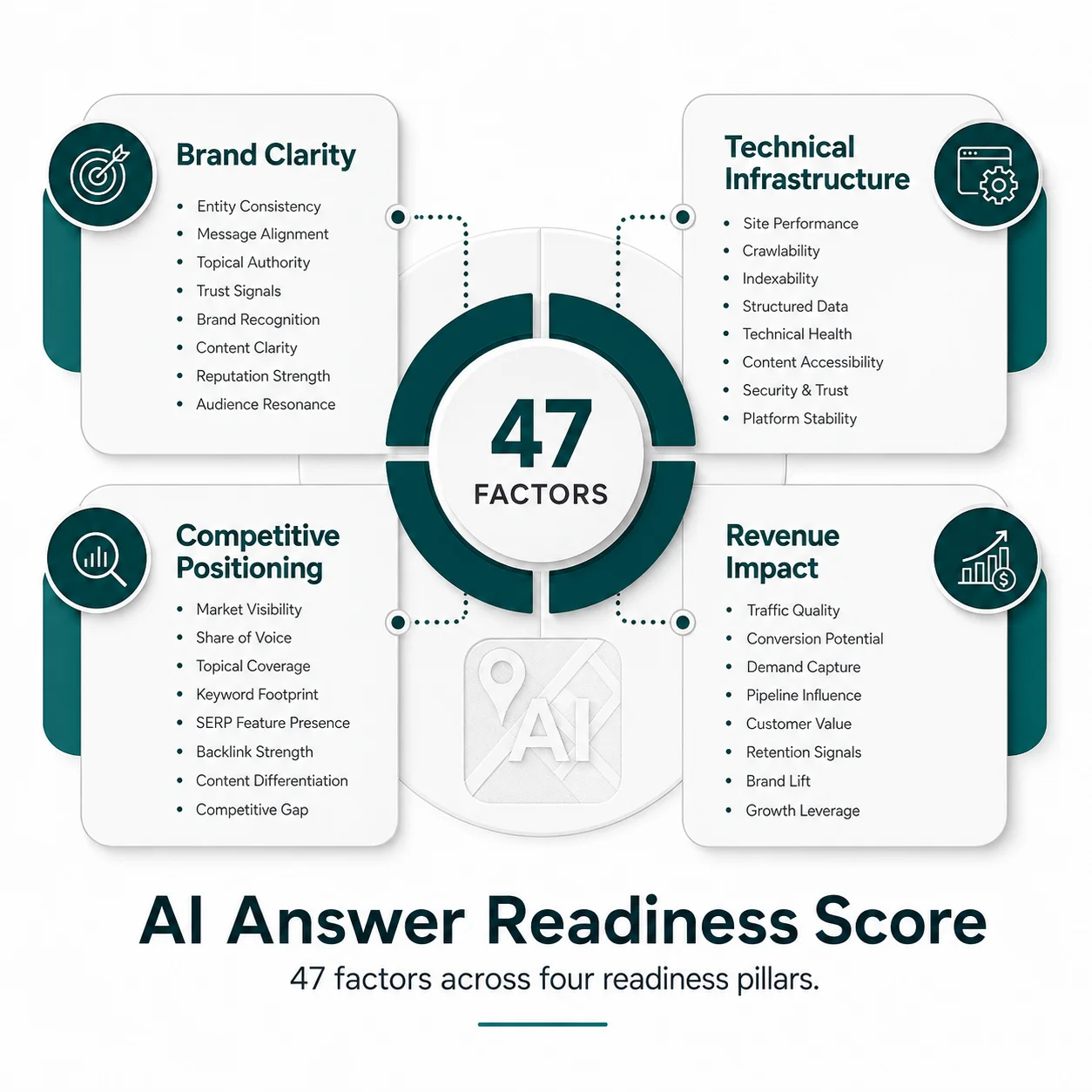
- The AI Answer Readiness Score (AARS) framework guides content strategy by evaluating 47 factors for AI compatibility.
- Successful AI content balances automation benefits with human oversight for quality, ethics, and E-E-A-T.
Foundations of AI Content
What is AI Content Creation for AEO?
AI content creation for Answer Engine Optimization (AEO) focuses on structuring information to be easily found, understood, trusted, and cited by AI search engines and AI Overviews.
AI content creation is the strategic development of digital content designed for consumption by AI models and AI search systems. This differs from traditional SEO content which primarily targets human readers via keyword matching. AEO content prioritizes clarity, factual accuracy, and structured data, making it highly extractable and verifiable for AI-driven answers.
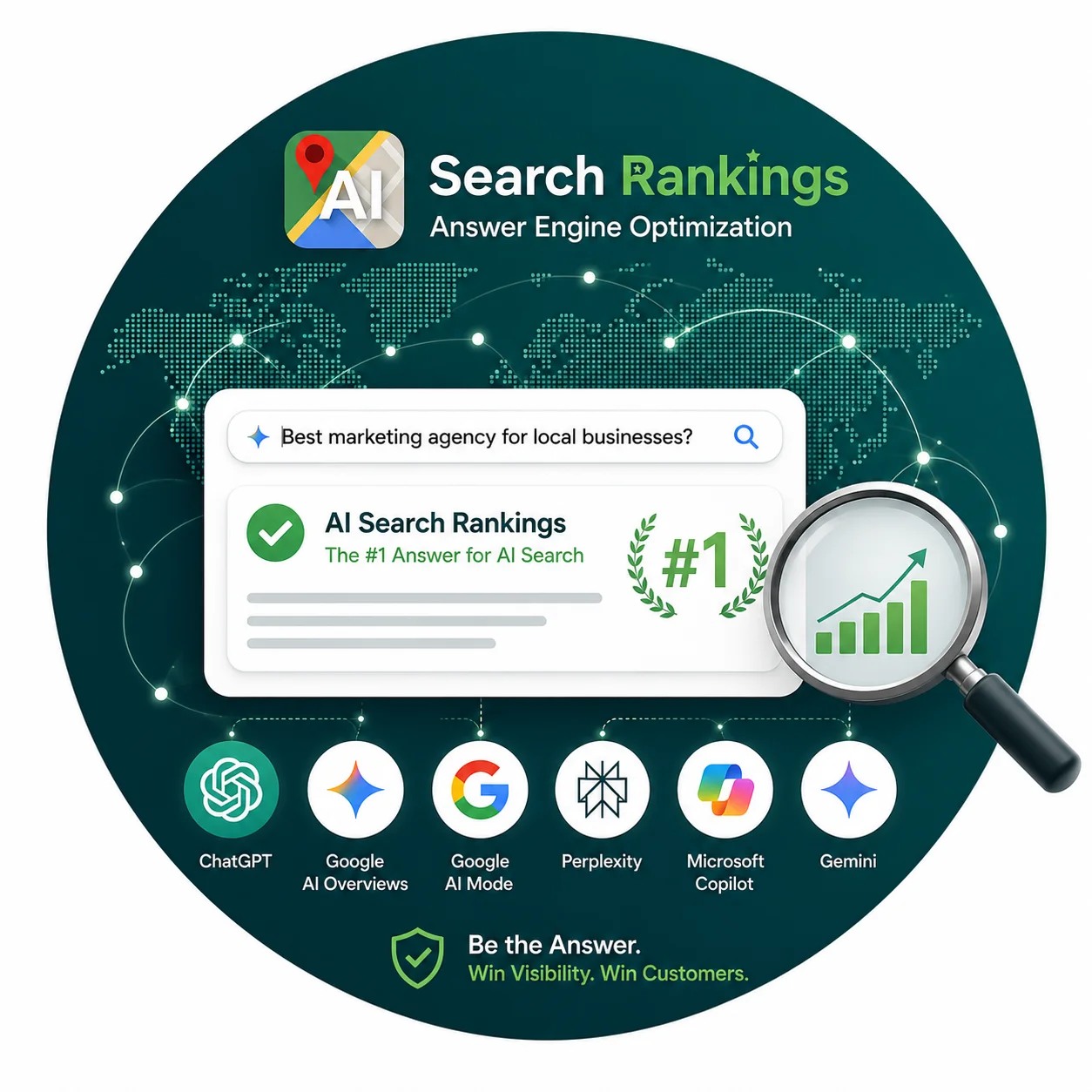
For businesses, creating AI-optimized content means preparing your website to serve as a reliable source of information for systems like ChatGPT, Google AI Overviews, Google Gemini, and Microsoft Copilot. This approach ensures your brand is recommended directly as the answer when users ask questions. This strategy moves beyond simple ranking to achieve direct citation and recommendation.
- Knowledge Block: Answer Engine Optimization (AEO)
- Answer Engine Optimization (AEO) is a specialized digital marketing discipline that helps businesses become easier for AI search engines to find, understand, trust, cite, and recommend as the answer. This goes beyond traditional SEO by focusing on direct, authoritative answers to user queries within AI conversational interfaces and generative AI search results. AEO ensures your content is not just visible, but directly helpful and actionable to AI systems and their users.
Why AEO Matters
Why AI Search Engines Demand Specific Content
AI-optimized content provides clear benefits by directly addressing the mechanisms and requirements of AI search systems.
Increased AI Visibility
Content optimized for AI is more likely to be selected and cited by AI overviews and conversational agents. This translates to direct brand exposure where users get answers.
Enhanced Trust Signals
AI systems prioritize authoritative, factual, and well-structured content. Optimizing for these signals builds trust with AI, increasing your chances of being a trusted source.
Improved Answer Extractability
Clear, concise, and structured answers make it easier for AI to extract and present your information. This reduces ambiguity and ensures your core message is delivered accurately.
Broader Audience Reach
AI search extends beyond traditional web results to voice assistants and multimodal searches. Optimized content positions your brand to reach users across these diverse interfaces.
Stronger Authority Building
Being cited as an answer by multiple AI platforms establishes your brand as an industry authority. This strengthens your overall digital presence and credibility over time.
Future-Proofing Your Strategy
As AI search evolves, traditional SEO methods may become less effective. Investing in AEO content prepares your business for the next generation of search behavior and user interaction.
Strategic Approach
Traditional SEO vs. AI Content Optimization
Understanding the differences between traditional SEO and AI content optimization helps businesses prioritize effective strategies for modern search environments.
| Feature | Traditional SEO Content | AI Content for AEO |
|---|---|---|
| Primary Goal | Rank highly in organic search results. | Be cited and recommended as the direct answer by AI systems. |
| Content Focus | Keywords, links, and query matching. | Factual accuracy, clear definitions, structured data, semantic clarity. |
| Audience | Human users directly interacting with search results. | AI models, then human users via AI-generated answers. |
| Success Metric | Organic rankings, clicks, traffic. | AI citations, direct answers, share of AI voice, brand mention analysis. |
| Technical Requirements | Crawlability, indexability, page speed, mobile-friendliness. | Schema markup, entity relationships, knowledge graph integration, semantic coherence. |
| Ethical Considerations | Avoiding black-hat tactics, keyword stuffing. | Ensuring factual integrity, preventing AI hallucinations, managing AI-generated quality. |
Evaluation Framework
The AI Answer Readiness Score and Your Content
The AI Answer Readiness Score (AARS) provides a comprehensive framework to evaluate and improve your content's suitability for AI search engines.
AI Search Rankings utilizes the proprietary AI Answer Readiness Score (AARS) to assess your content. This score evaluates 47 readiness factors across four core pillars: Brand Clarity, Technical Infrastructure, Competitive Positioning, and Revenue Impact. For content creation, the Brand Clarity and Technical Infrastructure pillars are especially relevant.
Content must clearly define your business, products, and services for AI. It needs explicit answers to common customer questions. Technically, this content requires precise schema markup, internal linking, and a clean site architecture to ensure AI models can accurately parse and interpret your information. A higher AARS indicates your content is better equipped to be recognized and cited by AI.
Expert Note: Content Quality
For AI content, quality means absolute factual accuracy and clear, unambiguous language. AI models learn from vast datasets, so presenting verifiable, precise information minimizes the risk of AI hallucination or misinterpretation. Focus on being the definitive source of truth for your specific topics.
Implementation Steps
Steps to Develop AI-Ready Content
Follow these structured steps to create content that AI search engines can easily find, understand, and cite for maximum impact.
-
Identify Core AI Questions
Done when: You have a prioritized list of 20-30 direct questions relevant to your business that AI systems might answer.Research the specific questions your target audience asks, focusing on direct, factual queries. Understand how these questions might be phrased to a conversational AI assistant. This includes identifying long-tail queries and implicit informational needs.
-
Structure for Answer Extractability
Done when: Each content piece includes an immediate direct answer followed by supporting details, definitions, and examples.Organize your content with clear headings, subheadings, and short, declarative sentences that directly answer questions. Use lists, tables, and definitions to break down complex information. Each answer should be self-contained and easily quotable by an AI model.
-
Integrate Semantic Markup (Schema.org)
Done when: All relevant content sections have accurate, validated Schema.org JSON-LD implemented on the page.Implement appropriate Schema.org markup, such as `FAQPage`, `HowTo`, `Product`, or `Organization`, to define entities and their relationships explicitly. This provides structured context that AI models rely on for accurate understanding and citation.
-
Establish Authoritative E-E-A-T Signals
Done when: Content is attributed to verified authors, includes citations for claims, and aligns with established industry expertise.Demonstrate Expertise, Experience, Authority, and Trust in your content. Cite credible sources, include author bios with relevant credentials, and link to other authoritative resources. This signals trustworthiness to AI systems evaluating content quality.
-
Monitor and Iterate AI Visibility
Done when: You have a regular reporting process for AI visibility and a plan to update content based on AI performance data.Track how your content performs in AI search results and generative AI summaries. Analyze AI citations, direct answer placements, and related traffic. Use these insights to refine your content, address new AI queries, and maintain AI visibility over time.
Considerations
Overcoming Challenges in AI Content Generation
Advantages
- Scales content production significantly, allowing for creation of more topic coverage.
- Reduces time and resources spent on initial content drafts and research synthesis.
- Ensures consistent tone and factual accuracy when guided by clear brand guidelines and data sources.
- Facilitates rapid content updates and adaptations based on evolving AI search trends and user queries.
Limitations to Consider
- Risk of producing generic or unoriginal content if AI tools are not guided by human expertise.
- Challenges in maintaining genuine E-E-A-T without human experience and unique insights.
- Potential for factual inaccuracies or
Verify Your AI Search Visibility
Discover how your brand is cited and recommended across ChatGPT, Google AI Overviews, and Gemini with our free site-level audit.
Get Free AI Visibility Audit