For business owners and marketing directors, understanding the desktop Search Engine Results Page, or SERP, is fundamental to digital success. The desktop SERP is the gateway through which potential customers discover your business, products, and services on traditional computer screens. It is far more than just a list of links; it is a complex market featuring various elements that directly influence your brand's visibility, authority, and ability to attract qualified leads. As search engines evolve with artificial intelligence, mastering desktop SERP optimization means adapting your strategies to secure prominent placement not just in organic listings, but also within new AI-driven answer formats and rich results.
Key Takeaways
- Desktop SERP is the search results page presented on traditional computer monitors, featuring diverse elements like organic listings, paid ads, and rich snippets.
- Optimizing for desktop SERP requires a deep understanding of evolving search engine algorithms and the increasing influence of AI on result presentation.
- Businesses must adapt traditional SEO strategies to incorporate Answer Engine Optimization (AEO) to gain visibility in AI Overviews and cited answers.
- Strategic content, technical SEO, and authority building are critical for securing top positions and capturing user attention on the desktop SERP.
Core Concepts
What is a Desktop SERP?
This section provides a foundational understanding of what constitutes a desktop Search Engine Results Page and its primary components.
The desktop SERP is the page displayed by search engines like Google, Bing, and DuckDuckGo when a user submits a query from a desktop or laptop computer. Unlike its mobile counterpart, desktop SERP typically offers a larger screen real estate, allowing for a more complex arrangement of search results. These results are not limited to the traditional "10 blue links"; they include a wide array of features designed to provide users with immediate, comprehensive answers and diverse options for information discovery. Understanding each element of the desktop SERP is critical for businesses aiming to optimize their online presence and capture user attention effectively.
Key components found on a typical desktop SERP include organic search results, paid advertisements, featured snippets, local packs, knowledge panels, image carousels, video results, and shopping results. Each of these elements serves a distinct purpose and represents a unique opportunity for businesses to gain visibility. The arrangement and prominence of these features can vary significantly based on the search query, user intent, and ongoing algorithmic updates by the search engine.
- Knowledge Block: Desktop SERP Defined
- The Desktop Search Engine Results Page (SERP) is the full page of search results displayed to a user on a desktop or laptop computer. It is characterized by its expansive layout which accommodates diverse content types beyond standard organic links, including detailed rich snippets, prominently placed advertisements, interactive knowledge panels, and local business listings. For businesses, optimizing for the desktop SERP means tailoring content and technical structure to appear favorably across these varied result types, thereby maximizing visibility and engagement with a broader audience segment.
Historical Context
Evolution of Desktop SERP: From 10 Blue Links to AI Overviews
This section traces the significant changes in desktop SERP layouts, highlighting the shift from basic link lists to sophisticated, AI-enhanced result pages.
The desktop SERP has undergone a profound transformation since its inception. Initially, search results were predominantly plain lists of ten organic links, commonly referred to as "10 blue links." Users would click these links to find the information they sought on external websites. This era emphasized traditional keyword matching and basic ranking factors.
Over time, search engines began introducing more interactive and rich elements. Rich snippets, derived from structured data, provided users with immediate information like star ratings or prices directly on the SERP. Featured snippets, often appearing at the top of the page, offered concise answers to specific questions, reducing the need for users to click through to a website. The introduction of local packs significantly boosted local businesses, displaying maps and business information directly on the SERP for location-based queries. Knowledge panels, powered by comprehensive databases, provided encyclopedic information about entities, people, and places. These enhancements marked a shift towards providing answers directly on the search results page, rather than merely pointing to them.
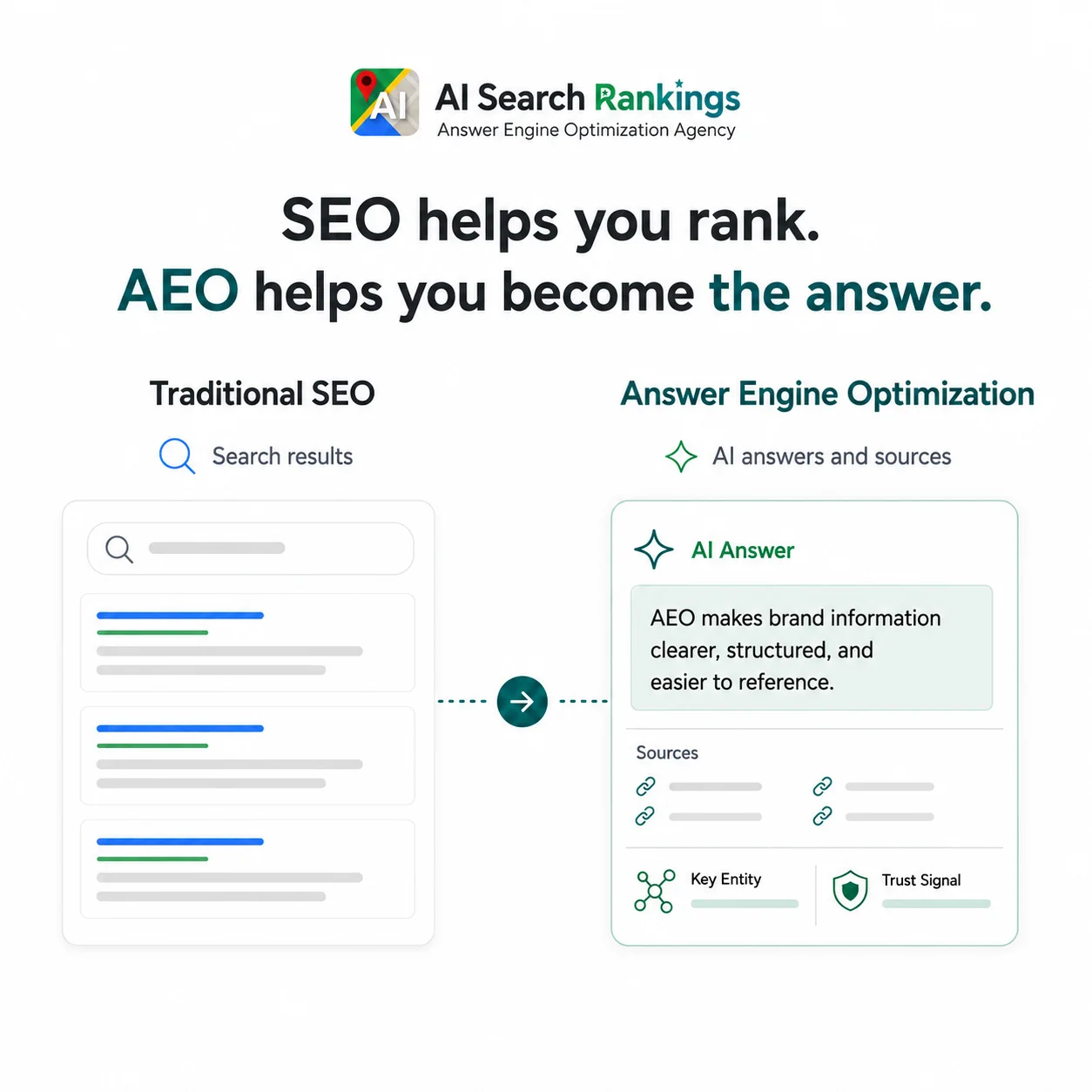
The current phase of evolution is defined by artificial intelligence and Answer Engine Optimization (AEO). AI-driven features, such as Google's AI Overviews and generative AI responses, now synthesize information from multiple sources to provide direct answers, summaries, and conversational experiences. This means that businesses must optimize their content not just for keywords and links, but also for clarity, accuracy, and authoritativeness, ensuring AI systems can easily find, understand, trust, cite, and recommend their content as the definitive answer.
Anatomy of Results
Key Components of the Desktop SERP
This section provides a detailed breakdown of the various elements that constitute a modern desktop SERP, explaining their function and impact on business visibility.
The desktop SERP is a active structure of information, each component vying for user attention. Understanding these elements is paramount for crafting an effective digital marketing strategy that targets business owners and marketing directors.
Organic Search Results
These are the traditional "blue links" that appear based on their relevance and authority as determined by a search engine's algorithms. They are not paid placements. Achieving high organic rankings requires robust SEO practices, including keyword research, high-quality content, and strong backlink profiles. For businesses, appearing in the top organic results signifies credibility and can drive significant, sustained traffic.
Paid Advertisements (PPC)
Paid ads typically appear at the very top and sometimes at the bottom of the SERP, clearly marked as "Sponsored" or "Ad." Businesses bid on keywords to display their ads, offering immediate visibility. While not part of organic ranking, effective PPC campaigns can quickly capture leads and complement organic efforts, especially for competitive terms.
Featured Snippets
Often referred to as "Position Zero," featured snippets directly answer a user's question, displayed prominently at the top of the SERP. They can appear as paragraphs, lists, or tables, extracted directly from a webpage. Capturing a featured snippet can dramatically increase visibility and click-through rates, even if your site is not the top organic result. Optimizing for these requires clear, concise answers within your content that directly address common questions.
Local Pack
For queries with local intent, the local pack displays a map and three local business listings, complete with addresses, phone numbers, and ratings. This is critical for local businesses, as it offers direct visibility and facilitates immediate action like calls or directions. Optimizing Google Business Profile and garnering positive reviews are key strategies for local pack placement.
Knowledge Panels
Appearing on the right-hand side of the desktop SERP for entity-based queries (e.g., specific companies, people, or landmarks), knowledge panels compile information from various sources into a summary box. For businesses, a well-optimized knowledge panel builds brand authority and provides necessary information at a glance, directly on the search results page. Structured data and authoritative online mentions contribute to their formation.
Rich Snippets and Structured Data
Rich snippets enhance organic listings with additional visual or informational elements, such as star ratings, product prices, or event dates. These are generated by implementing structured data (Schema.org markup) on your website. Rich snippets make your search listing stand out, improving click-through rates by offering more compelling and informative previews.
Image and Video Carousels
For visual or instructional queries, carousels of images or videos may appear. Optimizing images with descriptive alt text and relevant captions, and videos with clear titles and descriptions, can help your multimedia content appear in these prominent sections, driving traffic and engagement.
Each of these desktop SERP components offers a distinct avenue for visibility. A holistic strategy involves optimizing for a combination of these elements, tailored to your business goals and target audience's search behavior.
Expert Note
While desktop SERP is critical, always consider the mobile SERP experience. Mobile-first indexing means search engines prioritize the mobile version of your content for ranking. Ensure your desktop optimization strategies are complemented by a robust mobile experience, including fast loading times and responsive design, to maintain comprehensive search visibility.
Business Impact
Why Desktop SERP Dominance Matters for Your Business
This section outlines the strategic advantages and benefits that businesses gain by achieving strong visibility on desktop search engine results pages.
Enhanced Brand Authority
High rankings and prominent SERP features like knowledge panels and featured snippets establish your business as a trusted authority in your industry. This visual validation builds immediate credibility with potential customers.
Increased Qualified Lead Generation
Appearing higher on the desktop SERP, especially for relevant commercial keywords, drives more targeted traffic to your website. This results in a higher volume of qualified leads, directly impacting your sales pipeline and revenue.
Superior Competitive Advantage
Outranking competitors on the desktop SERP means capturing their potential audience. Dominating key SERP features allows your business to control the narrative and establish a leading position in your market segment.
Improved Local Discoverability
For businesses with physical locations, prominent placement in the local pack directly translates to increased foot traffic and local sales. Users searching for nearby services rely heavily on these quick, actionable results.
Cost-Effective Long-Term Visibility
While paid ads offer immediate reach, strong organic and featured SERP visibility provides a more sustainable and cost-effective long-term marketing channel. It reduces reliance on continuous ad spend for foundational traffic.
Preparation for AI Search Future
Optimizing for current desktop SERP features, especially structured data and direct answers, inherently prepares your content for the evolving market of AI-driven search engines and answer overviews.
User Behavior Insights
Understanding User Behavior on Desktop SERP
This section explores how users interact with desktop SERPs, providing insights critical for optimizing content and maximizing engagement.
User behavior on the desktop SERP is distinct from mobile, primarily due to the larger screen size and the typical context of a desktop search. Users on desktop computers are often engaged in more in-depth research, professional tasks, or complex problem-solving, leading to different interaction patterns.
Desktop users tend to scan results more thoroughly, often reviewing multiple snippets and headings before clicking. The "F-pattern" reading behavior, where users scan the top of the page horizontally and then vertically down the left side, is still prevalent. This emphasizes the importance of strong, descriptive headings and compelling meta descriptions for organic listings. Prominently placed rich snippets and featured snippets are highly effective in capturing immediate attention because they provide quick answers or relevant data points without requiring a click.
The larger display also means users are more likely to interact with various SERP features, such as comparing options in a shopping carousel, exploring details in a knowledge panel, or navigating a local map. For complex queries, desktop users are more patient in sifting through several pages of results if the initial results do not meet their needs. This indicates that comprehensive, high-quality content that addresses user intent in depth is necessary, as users are prepared to invest more time in their research.
Understanding these behavioral nuances helps businesses tailor their desktop SERP optimization strategies. This includes ensuring your content provides detailed answers, utilizing structured data to enhance rich snippets, and maintaining an authoritative presence across all relevant SERP features to cater to the desktop user's investigative approach.
Strategic Comparison
Optimizing for Traditional Desktop SERP vs. AI-Driven Results
| Factor | Traditional Desktop SERP Optimization | AI-Driven Search Results (AEO) |
|---|---|---|
| Primary Goal | Achieve top organic rankings and high click-through rates (CTRs) to website. | Become the trusted, cited answer across AI Overviews, chatbots, and generative experiences. |
| Content Focus | Keyword-rich articles, blog posts, and landing pages for human readers. | Structured, factual, comprehensive, and easily digestible answers optimized for AI understanding. |
| Technical SEO | Crawlability, indexability, site speed, mobile-friendliness. | Advanced structured data (Schema.org), knowledge graph readiness, semantic clarity, explicit entity relationships. |
| Authority Signals | Backlinks from high-authority domains, brand mentions. | Demonstrable expertise, authoritativeness, trustworthiness (E-E-A-T), unique proprietary data, clear authorship. |
| User Intent Match | Broad keyword matching and topic coverage. | Precise answer matching for specific queries, anticipating follow-up questions, providing comprehensive context. |
| Measurement Metrics | Organic traffic, keyword rankings, CTR, conversion rates. | AI citation rate, AI answer quality score, brand prominence in generative results, direct answer visibility. |
Actionable Strategy
A Strategic Process for Desktop SERP Optimization
This section outlines a clear, step-by-step process for business owners and marketing directors to systematically optimize their presence on desktop SERPs for both traditional and AI-driven results.
Conduct a Comprehensive SERP Feature Audit
Done when: You have a detailed spreadsheet outlining existing SERP features for your top 50 target keywords and an analysis of your current visibility within them.Begin by analyzing the current desktop SERP for your target keywords. Identify which SERP features (featured snippets, local packs, knowledge panels, image carousels) are already appearing for your most important queries. This audit reveals existing opportunities and gaps where your business can gain more visibility. Document competitor presence in these features.
Optimize Content for Direct Answers and Structured Data
Done when: All key service/product pages and informational articles have been reviewed for direct answer potential and correctly implemented structured data, validated using Google's Rich Results Test tool.Revamp existing content and create new content with a focus on providing clear, concise, and authoritative answers to common user questions. Structure your content logically with headings and subheadings. Implement Schema.org markup (structured data) for relevant information like FAQs, products, local business details, and how-to guides to make your content machine-readable and eligible for rich snippets and featured snippets.
Enhance Local and Entity Optimization
Done when: Your Google Business Profile is fully optimized, actively managed, and your core business information is consistent across at least 10 major online directories.For local businesses, rigorously optimize your Google Business Profile with accurate information, high-quality images, and consistent business hours. Actively manage and respond to reviews. For all businesses, ensure your brand's entity information (name, address, phone, website) is consistent across all online directories and authoritative sources to build a strong knowledge graph presence, facilitating knowledge panel creation and AI understanding.
Build and Amplify Authority Signals
Done when: You have a documented strategy for ongoing link building and PR, and monthly reports show an increase in authoritative backlinks and brand mentions.Cultivate high-quality backlinks from reputable industry sources to improve your domain authority. Focus on earning citations and mentions from industry publications, news sites, and relevant blogs. Strong authority signals are critical for both traditional organic rankings and for signaling to AI systems that your content is trustworthy and reliable for citation.
- Knowledge Block: Advanced SERP Feature Optimization
- Beyond foundational SEO, advanced SERP feature optimization involves a continuous process of monitoring, testing, and refining content specifically for specific result types. This includes A/B testing different content formats for featured snippets, analyzing search console data for impressions in image carousels, and proactively seeking opportunities for question-and-answer formats that align with voice search queries. It requires a granular approach to content creation, ensuring every piece is designed not just to rank, but to fulfill a specific role within the complex desktop SERP layout, thereby maximizing real estate and user engagement.
The Future of Search
The Interplay of Desktop SERP and AI Overviews
This section discusses how AI Overviews, a prominent AI-driven feature, are transforming the desktop SERP and what it means for business visibility.
The introduction of AI Overviews, such as those seen in Google Search Generative Experience (SGE), represents a significant shift in how information is presented on the desktop SERP. These generative AI responses appear at the top of the search results, often summarizing information from multiple sources and providing direct answers to complex queries. For businesses, this means that merely ranking highly in organic listings may no longer be sufficient; the goal must now include becoming the source that AI chooses to cite and recommend.
AI Overviews are designed to offer a more conversational and comprehensive search experience. They aim to answer queries that traditionally required users to visit multiple websites. For instance, a user searching for "best CRM software for small businesses" might receive an AI Overview that summarizes key features, compares top options, and provides direct links to cited sources, all within the SERP itself. This dramatically changes the user journey and places immense value on the quality and authority of the source content.
To thrive in this environment, businesses must adopt an Answer Engine Optimization (AEO) approach. AEO focuses on creating content that is not only human-readable but also highly machine-readable, factual, and authoritative. This ensures that AI systems can easily parse your content, understand its nuances, and trust it as a reliable source. Strategies include structuring information with clear headings, using precise language, backing claims with data, and building strong E-E-A-T (Experience, Expertise, Authoritativeness, Trustworthiness) signals. Ultimately, the interplay between desktop SERP and AI Overviews means that future visibility hinges on becoming the definitive answer, not just a link on a page.
Common Questions
Desktop SERP Frequently Asked Questions
What is the primary difference between desktop and mobile SERPs?
The primary difference lies in screen real estate and user intent. Desktop SERPs typically feature a wider array of elements and more detailed snippets due to larger screens, catering to users often performing more in-depth research. Mobile SERPs prioritize conciseness, speed, and local intent, with fewer results visible at once and an emphasis on immediate answers or actions.
How do featured snippets impact desktop SERP visibility?
Featured snippets significantly boost desktop SERP visibility by occupying "Position Zero" at the top of the results page. They provide a direct answer to a user's query, making your content highly prominent and increasing brand exposure even if your organic ranking is lower. Earning featured snippets can lead to higher click-through rates and establish your business as an authority.
Is traditional SEO still relevant for optimizing desktop SERPs in the age of AI?
Yes, traditional SEO remains highly relevant as it forms the foundational elements for online visibility. However, it must evolve to incorporate Answer Engine Optimization (AEO). While traditional SEO ensures crawlability and indexability, AEO specifically optimizes content for AI understanding, trust, and citation, preparing businesses for AI Overviews and generative search experiences while still benefiting traditional organic listings.
What role does structured data play in desktop SERP optimization?
Structured data, or Schema.org markup, is critical for desktop SERP optimization because it helps search engines understand the context and meaning of your content. This machine-readable data enables your pages to appear with rich snippets (e.g., star ratings, prices) and enhances eligibility for featured snippets and knowledge panels. It also assists AI systems in accurately interpreting your content for generative answers.
How can local businesses improve their desktop SERP presence?
Local businesses can improve their desktop SERP presence by optimizing their Google Business Profile with accurate information, engaging with customer reviews, and ensuring consistent NAP (Name, Address, Phone) data across all online directories. Generating local citations and creating localized content also significantly boosts visibility in the local pack and map results for relevant geographic searches.
Ready to Become the Answer AI Recommends?
Get a complete AI visibility audit and a custom Answer Engine Optimization roadmap built for your business, your market, and your revenue goals.
No contracts. Cancel any time. Results you can verify.
Verify Your AI Search Visibility
Discover how your brand is cited and recommended across ChatGPT, Google AI Overviews, and Gemini with our free site-level audit.
Get Free AI Visibility Audit