AI Overviews matter profoundly in 2024-2025 because they fundamentally reshape user search behavior, directly influencing organic traffic, brand visibility, and the competitive landscape. As Google prioritizes direct answers, businesses must adapt their content strategies to secure a position within these prominent AI-generated summaries.
The primary impact is on organic traffic. While AI Overviews aim to provide immediate answers, they can also reduce the necessity for users to click through to websites, potentially leading to a decrease in traditional organic click-through rates (CTRs) for some queries. However, being cited within an AI Overview offers a powerful new form of visibility and implicit endorsement, driving highly qualified traffic from users seeking deeper engagement after receiving an initial answer. This makes securing citations a critical new SEO objective.
From a competitive necessity standpoint, businesses that fail to optimize for AI Overviews risk being left behind. Competitors who successfully adapt will gain a significant advantage in brand exposure and authority. The shift emphasizes the need for Answer Engine Optimization (AEO), a methodology focused on making content findable, understandable, trustworthy, and citable by AI systems. This involves a deep understanding of semantic SEO, entity optimization, and E-E-A-T (Experience, Expertise, Authoritativeness, Trustworthiness).
AI Overviews also signal the future of search. Google's investment in generative AI indicates a long-term commitment to more conversational, intelligent search experiences. Businesses that proactively embrace this change are better positioned for future algorithm updates and evolving user expectations. This isn't just about adapting to a new feature; it's about preparing for a paradigm shift in how information is discovered and consumed online. For local businesses, this means ensuring their local entity data, services, and unique selling propositions are clearly articulated and machine-readable, making them prime candidates for local AI Overview citations. AI Search Rankings, an Answer Engine Optimization (AEO) agency, specializes in helping businesses navigate this new terrain, ensuring their content is optimized for these critical AI surfaces. Learn more about our Google AI Overviews Optimization services.
AI Overviews
What AI Overviews means for your visibility in AI answers, and the specific changes that improve it
Why AI Overviews Matters in 2024-2025
Traditional
Modern AI
Understanding AI Overviews
A comprehensive overviewAI assistants answer a question by quoting the sources they can understand and trust. AI Overviews decides whether your page is one of them. ChatGPT, Perplexity, and Google AI Overviews each read a page, extract the part that answers the question, and cite it. A page they cannot parse is skipped, however well it ranks.
This page explains what changes that outcome: a self contained answer near the top, a plain definition of the entity, question led headings, short claims worth citing, and evidence placed beside the claim it supports. Each one is a change you can make today and check afterwards.
Process Flow
Key Components & Elements
Content Structure
Organize information for AI extraction and citation
Technical Foundation
Implement schema markup and structured data
Authority Signals
Build E-E-A-T signals that AI systems recognize
Performance Tracking
Monitor and measure AI search visibility
Implementation Process
Assess Current State
Run an AI visibility audit to understand your baseline
Identify Opportunities
Analyze gaps and prioritize high-impact improvements
Implement Changes
Apply technical and content optimizations systematically
Monitor & Iterate
Track results and continuously optimize based on data
Benefits & Outcomes
What you can expect to achieveImplementing AI Overviews best practices delivers measurable business results:
- Increased Visibility: Position your content where AI search users discover information
- Enhanced Authority: Become a trusted source that AI systems cite and recommend
- Competitive Advantage: Stay ahead of competitors who haven't optimized for AI search
- Future-Proof Strategy: Build a foundation that grows more valuable as AI search expands
Key Metrics
How to Decide What You Actually Need
Common Mistakes and How to Avoid Them
Mistake 1: Treating an AI Overview as the final answer.
People read the AI Overview and stop, assuming it is the complete truth. This seems reasonable because it is presented as a concise summary, often at the top of search results. However, this causes you to miss nuanced details, alternative perspectives, or more current information from linked sources. AI Overviews can sometimes misinterpret facts. The correction is to always view AI Overviews as a starting point. Click through at least two or three source links to verify information and explore deeper.
Mistake 2: Asking overly broad or vague questions.
Users type in general queries, such as "best car" or "history of the world." This seems reasonable as they expect the AI to understand context and provide a tailored summary. What it actually causes is the AI Overview struggling to pinpoint specific intent, leading to a generic or unhelpful summary. To avoid this, be specific. This seems reasonable because the AI is a sophisticated tool, and the overview often appears authoritative. This actually causes you to rely on potentially outdated, biased, or incorrect information if the AI pulled from less reliable sources. Without checking, you cannot assess credibility. The correction is to always examine the source links. Look for reputable domains, recent publication dates, and diverse perspectives.
Mistake 4: Using AI Overviews for highly sensitive or critical information.
People seek medical, legal, or financial advice directly from an AI Overview. This seems reasonable as AI can quickly synthesize information, appearing to be a fast way to get answers. What it actually causes is relying on general information that lacks the context, expertise, and personalized understanding of a human professional, potentially leading to harmful decisions. For health, legal, or financial matters, use AI Overviews only for general background research. Always consult qualified professionals for personalized, critical advice.
Quick Checklist
What This Cannot Do
AI Overviews are powerful tools, but they operate within specific boundaries. It is important to understand what this technology cannot promise or control.
First, AI Overviews do not generate new facts or conduct original research. Their output is a synthesis of existing information found across the public web. If reliable, high-quality source material is scarce, inaccurate, or outdated for a particular query, the resulting overview will reflect those limitations. This means AI Overviews are not a substitute for in-depth human analysis or critical evaluation, especially for complex, rapidly evolving, or highly specialized topics.
Second, the visibility and content of any AI Overview depend entirely on the search engine's proprietary algorithms and indexing systems. These systems are operated by third parties, such as Google or Microsoft, and are subject to continuous, unannounced changes. We cannot influence or predict these algorithmic updates. Therefore, we cannot guarantee specific placement, a particular citation, or any fixed level of traffic derived from AI Overviews.
Achieving potential inclusion in AI Overviews is not an instant process. It requires consistent effort in creating high-quality, authoritative content and optimizing your web presence. Realistic timelines for seeing potential shifts in search engine processing can range from several weeks to many months, depending on the competitive landscape and the frequency of search engine crawls. The ultimate decision on what content is featured, and how it is summarized, rests solely with the search engine provider.
Quick Checklist
Your Next Step
Get Your Free AuditFrequently Asked Questions
Get Started Today
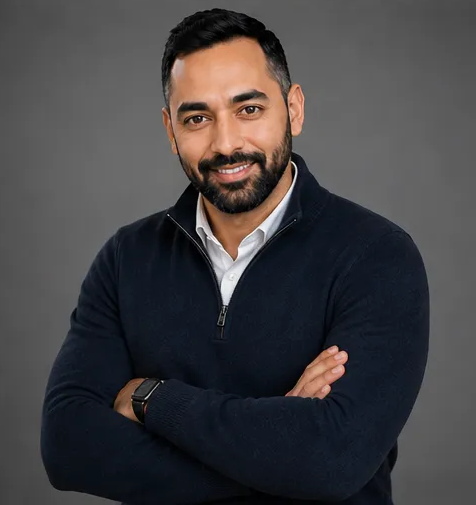
Jagdeep Singh
AI Search Optimization Expert
Jagdeep Singh is the founder of AI Search Rankings and a recognized expert in Answer Engine Optimization (AEO).. With over 12+ years of experience in SEO and digital marketing, he helps businesses adapt their content strategies for the AI search era.