AI Search Fundamentals
Understanding People Also Ask Algorithm Ranking Factors
People Also Ask (PAA) boxes are a critical feature in modern search, driven by AI algorithms that identify and answer related questions. Optimizing for PAA means understanding how AI ranks these answers to capture more visibility and establish your business as a trusted source.
The rise of generative AI in search has transformed how information is discovered. Users often see PAA boxes in search results, presenting a active list of questions related to their initial query. These boxes are not just simple keyword matches; they reflect a sophisticated understanding of user intent and related information needs.
For businesses, appearing in PAA sections means gaining direct visibility where potential customers are actively seeking answers. This direct answer placement builds authority and trust, making your content more likely to be cited or recommended by AI search engines. It requires a shift from traditional keyword stuffing to a focus on direct, helpful, and contextually rich answers.
Key Takeaways
- People Also Ask (PAA) features are active question sets generated by AI to answer related queries, offering prime visibility for businesses.
- Key PAA ranking factors include direct answer relevance, content authority, structured data implementation, readability, and evidence of expertise.
- Businesses must adopt an Answer Engine Optimization (AEO) strategy to consistently appear as authoritative PAA answers.
- Optimizing for PAA involves specific content structuring, semantic alignment, and ongoing performance monitoring.
Core Concepts
What Are People Also Ask Features and How Do They Work?
People Also Ask (PAA) features are an interactive section within search results that display questions related to the user's initial query, powered by advanced AI algorithms.
PAA results expand to reveal a concise answer, often extracted directly from a webpage. These answers are not pre-written by the search engine; rather, AI models analyze vast amounts of web content to identify the most relevant, authoritative, and direct answer to a specific question. When a user clicks a PAA question, more related questions often appear, forming a rich, interactive knowledge graph.
The goal of PAA is to anticipate user information needs and provide immediate, contextually relevant answers, reducing the need for multiple searches. This functionality is critical for businesses because it represents an opportunity to directly answer common customer questions at various stages of their buyer journey, from initial research to specific problem-solving. AI Search Rankings helps businesses structure content specifically for these opportunities.
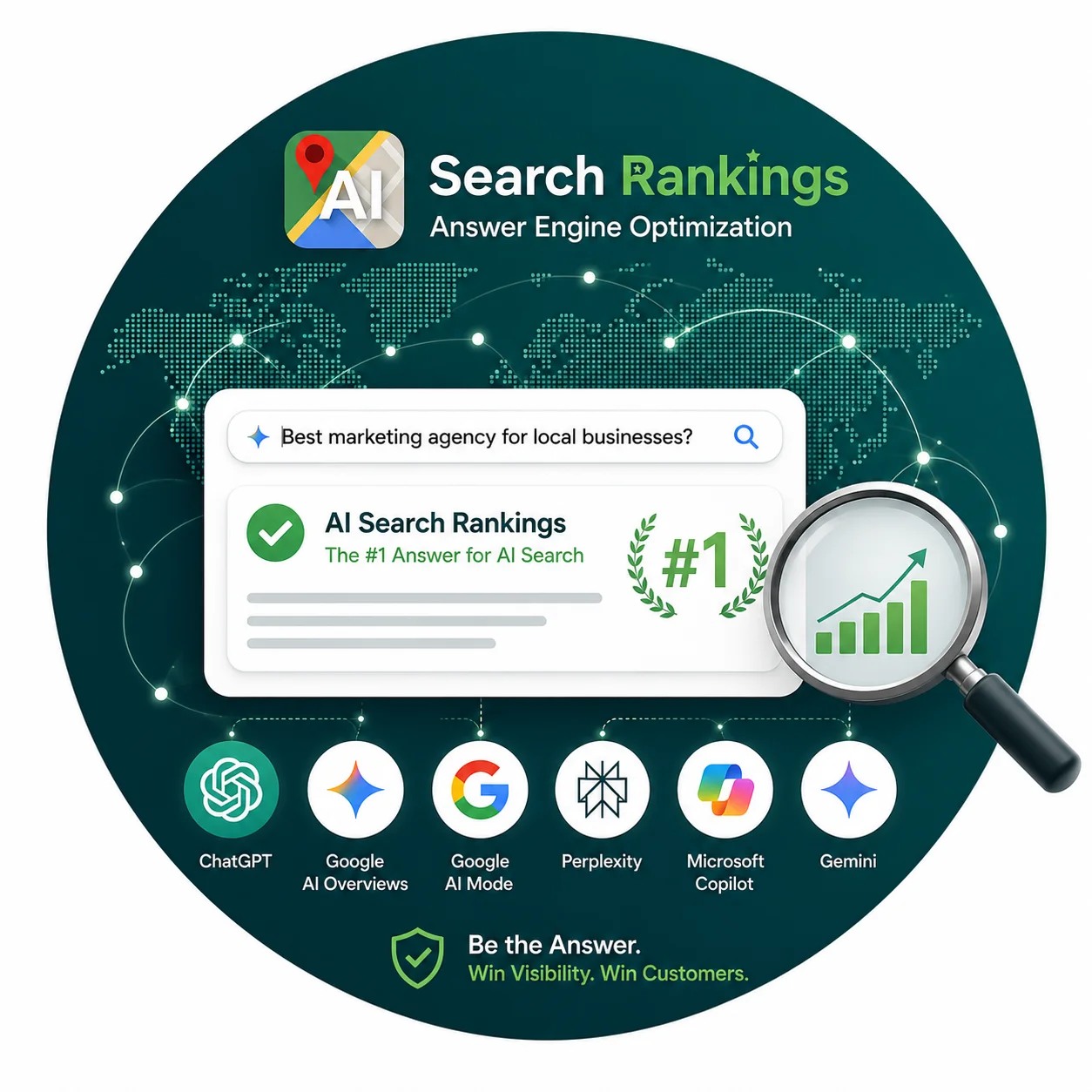
- Knowledge Block: Query Intent Alignment
- Query intent alignment is the degree to which content precisely addresses the user's underlying reason for searching, beyond just matching keywords. For PAA, AI algorithms deeply analyze the implicit and explicit intent behind a question to find the most satisfying answer. Content that clearly understands and fulfills this intent, providing a direct and comprehensive answer, ranks higher in PAA because it offers superior information gain for the user.
AI Mechanics
How Do AI Search Engines Select PAA Answers?
AI search engines use a combination of natural language processing, semantic analysis, and content quality signals to select the most suitable answers for People Also Ask boxes.
Natural Language Understanding
AI models understand the nuances of a question, not just keywords. They identify synonyms, context, and the underlying intent to match queries with the most semantically relevant answers available on the web.
Content Relevance and Specificity
Algorithms prioritize content that provides a direct, concise, and specific answer to the PAA question. Vague or overly broad responses are less likely to be selected by AI for these featured snippets.
Source Authority and Trust
AI evaluates the credibility of the source. Content from established, trusted, and expert domains is more likely to be featured in PAA, reflecting the E-E-A-T principles of search engines.
Structured Data Implementation
Schema markup, especially Q&A or FAQPage schema, helps AI understand the question-answer pairs on your page. This explicit structuring aids in the accurate extraction of PAA content.
User Engagement Signals
While not direct ranking factors, signals like low bounce rates and extended time on page suggest user satisfaction. AI may indirectly learn from these signals that content provides helpful answers.
Topical Coverage and Depth
Content that comprehensively covers a topic and its related sub-topics establishes deeper expertise. This allows AI to confidently extract answers for a broader range of PAA questions within that domain.
Key Determinants
necessary PAA Ranking Factors Explained
Optimizing for PAA requires a focus on specific factors that AI algorithms prioritize when identifying and ranking answers.
The AI algorithm relies on several core signals to determine which content best answers a PAA query. Content must not only be relevant but also presented in a format that AI can easily parse and understand. This involves more than just keyword usage; it demands a strategic approach to content architecture and semantic alignment.
- Direct Answer Format: The content should contain a clear, concise answer immediately following the question. This often appears as a short paragraph or bulleted list directly below a heading that poses the question.
- Semantic Relevance: Beyond exact keyword matches, the AI evaluates the semantic relationship between the PAA question and your content. This means your content should cover the topic comprehensively and contextually.
- E-E-A-T Signals: Expertise, experience, authoritativeness, and trustworthiness are critical. Content from sites demonstrating real-world experience and clear authorship is favored. This includes author bios, citations, and a strong overall domain authority.
- Structured Data Markup: Implementing Schema.org markup, particularly `FAQPage` or `QAPage` schema, provides explicit signals to AI about the question and answer pairs on your page. This makes it easier for AI to extract and present your content accurately.
- Content Readability and Clarity: Answers must be easy to read and understand. Simple language, short sentences, and a logical flow improve the chances of your content being selected. Avoid jargon or define it clearly.
- Topical Authority: Websites that consistently produce high-quality, in-depth content on a particular topic establish themselves as authorities. AI recognizes this deep topical coverage and trusts these sources for answers across related PAA questions.
- Mobile-Friendliness: Given the prevalence of mobile search, content that renders perfectly and loads quickly on mobile devices is necessary. A poor mobile experience can negatively impact visibility across all search features, including PAA.
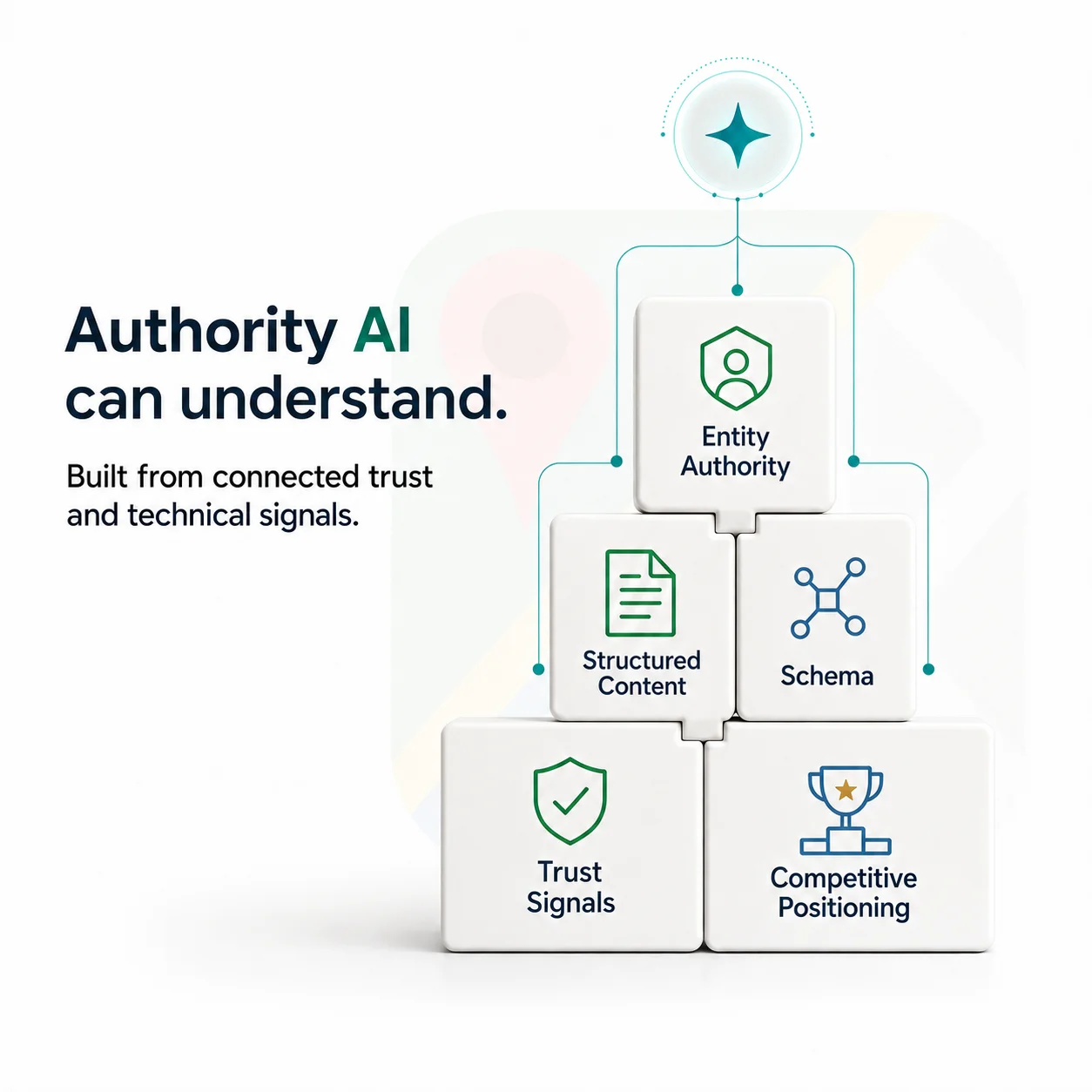
Expert Note: Optimizing for Clarity
When writing for PAA, always begin your answer with a direct, declarative sentence that fully addresses the question. Avoid introductory clauses or unnecessary fluff. This allows AI to instantly grasp the core answer and present it clearly to users.
Step-by-Step Process
The AEO Approach to Optimizing for PAA
Follow these structured steps to strategically optimize your content for People Also Ask features and enhance your AI search visibility.
-
Identify PAA Opportunities and User Intent
Done when: You have a prioritized list of specific PAA questions relevant to your business, mapped to user intent and buyer journey stages.Begin by researching existing PAA questions related to your target keywords and topics. Use competitor analysis and dedicated AEO tools to discover questions that your audience is actively asking. Understand the underlying intent behind these questions.
-
Craft Direct, Concise, and Authoritative Answers
Done when: Your content contains explicit Q&A sections where each question is directly and concisely answered, ready for AI extraction.For each identified PAA question, write a short, clear, and direct answer, typically 40-60 words. Place this answer immediately after a heading that mirrors the PAA question. Ensure the answer is factually accurate and reflects your expertise.
-
Implement Structured Data Markup (Schema)
Done when: All PAA-optimized content sections have valid and correctly implemented Schema.org markup for Q&A content.Apply `FAQPage` or `QAPage` Schema.org markup to your content where PAA questions and answers exist. This machine-readable code tells AI exactly where to find the questions and their corresponding answers, improving extraction accuracy.
-
Build and Demonstrate Topical Authority
Done when: Your content cluster demonstrates broad and deep coverage of your industry's key topics, supported by internal linking and author signals.Develop a comprehensive content strategy that covers your core topics in depth. Create internal links between related content pieces to show topical relationships. Ensure clear author attribution and expert signals on your website to reinforce E-E-A-T.
-
Monitor Performance and Refine Strategy
Done when: You have a consistent process for monitoring PAA performance and iterating on your content and Schema markup based on real-world results.Regularly track your PAA visibility in AI search results using specialized tools. Analyze which questions your content is answering, which ones you are missing, and user engagement signals. Use this data to continually refine your content and optimization efforts.
Strategic Approach
Traditional SEO vs. AEO for PAA Optimization
| Factor | Traditional SEO Approach | Answer Engine Optimization (AEO) Approach |
|---|---|---|
| Primary Goal for PAA | Often coincidental, aiming for top organic rankings hoping PAA follows. | Directly targets PAA inclusion to be the cited answer, enhancing AI trust and visibility. |
| Content Strategy | Keyword-focused articles, blog posts; broader content with internal linking. | Question-answer format, explicit Q&A sections, intent-driven content structures. |
| Technical Optimization | Canonical tags, site speed, mobile responsiveness, basic header structure. | Advanced Schema.org markup (FAQPage, QAPage), clear semantic relationships, machine-readable content. |
| Measurement & Metrics | Organic rankings, clicks, impressions from standard search results. | PAA impressions, explicit citations by AI, direct answer visibility, AI Answer Readiness Score. |
| Expertise Signals | General content quality and backlinks. | Explicit E-E-A-T demonstration: author bios, detailed experience, verifiable claims, trusted citations. |
Implementation Challenges
Common Pitfalls in PAA Optimization
Businesses often encounter specific challenges when attempting to optimize for People Also Ask features, leading to missed opportunities for AI visibility.
Limitations to Consider
- Generic or Vague Answers: Providing non-specific answers that do not directly address the PAA question precisely, making it difficult for AI to extract a definitive snippet.
- Lack of Structured Data: Failing to implement `FAQPage` or `QAPage` schema leaves AI guessing about your content structure, reducing the likelihood of PAA inclusion.
- Insufficient Topical Authority: If your website lacks deep and broad content coverage on a subject, AI will not perceive it as an authoritative source for related questions.
- Poor Readability: Content that is difficult to read due to complex language, long paragraphs, or poor formatting deters both human users and AI extraction.
- Ignoring User Intent: Focusing solely on keywords rather than the underlying intent of PAA questions can lead to answers that miss the mark for what users truly need.
- Infrequent Content Updates: Stale content or outdated answers will quickly lose favor with AI systems that prioritize fresh, accurate information.
Critical Error to Avoid
Never create content for PAA that fabricates answers or provides misleading information. AI systems prioritize accuracy and authority. Disinformation can lead to severe penalties and a loss of trust from both AI and users.
Strategic Integration
Integrating PAA Strategy into Your Content Roadmap
Effectively incorporating PAA optimization into your broader content strategy ensures consistent visibility and relevance in AI-driven search.
A successful PAA strategy is not a one-time effort but an ongoing process integrated into your overall content creation and maintenance. This means aligning PAA opportunities with your content calendar and editorial guidelines. Identify existing content that can be updated with clear PAA-optimized Q&A sections. For new content, proactively include PAA research in the planning phase.
Consider how PAA questions map to different stages of your customer journey. For example, early-stage questions might focus on definitions and general information, while later-stage questions could address product comparisons or specific use cases. Tailoring your answers to these stages enhances their relevance and impact. Regularly review your content for new PAA opportunities that arise as search trends evolve and new questions become popular.
AI Search Rankings specializes in this comprehensive approach. Our methodology includes a Free AI Visibility Audit, which evaluates your current content's readiness for PAA and other AI search features. This audit helps identify gaps and provides a clear roadmap for optimization, ensuring your content meets the exacting standards of modern answer engines.
Practical Application
PAA Optimization in Action: A Local Business Example
Consider a local plumbing service aiming to capture more local AI search traffic through optimized People Also Ask features.
A plumbing business, "Reliable Pipes of Fremont," wants to improve its AI visibility. They start by researching PAA questions related to local plumbing issues. They find common questions like "How to fix a leaky faucet?" and "What causes low water pressure in homes?"
- Content Creation: They create detailed blog posts addressing each question, with a specific H2 heading for the question and a concise, direct answer in the first paragraph. For "How to fix a leaky faucet?" the article includes clear, numbered steps and mentions when a professional is needed.
- Structured Data: The website developers add `FAQPage` schema to these new and updated articles, explicitly marking the questions and answers.
- Local Context: For questions like "emergency plumber near me," they ensure their Google Business Profile is fully optimized, their service area is clear, and their website prominently features their Fremont location and contact information. They include local landmarks in relevant content.
- Expertise: Each article is attributed to Jagdeep Singh, Founder and Lead Answer Engine Optimization Strategist at AI Search Rankings, demonstrating real industry experience and expertise.
- Results: Over time, "Reliable Pipes of Fremont" starts appearing in PAA boxes for relevant queries, driving more qualified traffic to their site and increasing local service inquiries. This direct placement establishes their business as a trusted local authority for plumbing solutions.
Common Questions
People Also Ask Optimization Frequently Asked Questions
What is the difference between PAA and featured snippets?
Featured snippets provide a single direct answer at the top of search results. PAA presents multiple related questions in an expandable box, often appearing below featured snippets or organic results. While both offer direct answers, PAA is interactive and addresses a broader range of related user intents.
Can my content appear in both PAA and featured snippets?
Yes, it is possible for the same piece of content to be used for both a featured snippet and a PAA answer. This often happens when a page provides a highly relevant, concise answer to a core query and also answers related questions effectively within its structure. This dual visibility significantly boosts organic presence.
How long does it take to see results from PAA optimization?
Results for PAA optimization can vary. Some businesses may see improvements in weeks, especially for well-structured, authoritative content. Others may take several months as AI algorithms crawl, process, and re-evaluate content. Consistent, ongoing optimization and building topical authority are key for sustained success.
Is PAA optimization only for informational content?
No, PAA optimization is not limited to purely informational content. While definitions and explanations are common, PAA can also feature questions about products, services, comparisons, and how-to guides. Businesses should optimize all types of content that directly answer user questions relevant to their offerings.
Your Next Step
What To Do Next With Understanding Paa Algorithm Ranking Factors
Take these specific steps to measure your current visibility and apply these ranking factors to your own website. The next step is set out below, along with what happens after you take it.
Request your Free AI Visibility Audit
What you receive: You receive a scheduled strategy session to discuss your baseline performance.Submit your website details to initiate a comprehensive evaluation of your current search presence. We analyze your domain against the specific ranking factors that AI search engines use to select direct answers.
Review your AI Answer Readiness Score
What you receive: You obtain a clear, objective metric that quantifies your current ability to rank in AI question boxes.Examine your performance across 47 readiness factors divided into four core pillars. This assessment identifies the exact gaps in your brand clarity and technical infrastructure that prevent AI from citing your content.
Execute a 90-Day AEO Sprint
What you receive: You transition into the monthly monitoring phase to track your ongoing answer placement and grow your topical authority.Apply the Local Answer System to find, fix, and structure your existing content for better extraction. This focused engagement aligns your website architecture with the semantic signals that generative search engines require.
Select the action below to begin. You will receive a written assessment of where your business currently appears in AI search, and the specific corrections that would change it.
Ready to Become the Answer AI Recommends?
Get a complete AI visibility audit and a custom Answer Engine Optimization roadmap built for your business, your market, and your revenue goals.
No contracts. Cancel any time. Results you can verify.
Verify Your AI Search Visibility
Discover how your brand is cited and recommended across ChatGPT, Google AI Overviews, and Gemini with our free site-level audit.
Get Free AI Visibility Audit