Schema markup
Schema Markup Services That Help Search Engines and AI Tools Read Your Facts Correctly
Schema markup writes your business facts in page code that machines read directly, using JSON-LD. We add only the types your pages genuinely support, such as Organization, Service, and FAQPage, check every value against the visible page, remove duplicates added by themes and plugins, and recheck the markup whenever a page changes.
- Real markup example on this page
- Published pricing from $799 per month
- Reply within 24 hours
Free, with no obligation
Get a free AI search review
Tell us where to reply. A strategist looks at how AI tools describe your business and replies within 24 hours.
This form needs JavaScript. Call +1 (510) 399-5523, email jd@aisearchrankings.com, or use the contact page.
Request received
Thank you. A strategist will reply within 24 hours, Monday to Friday, 9am to 6pm Pacific Time.
While you wait, you can take the free readiness check or compare the published packages.
We use your details only to reply. We never sell your information. Read our privacy policy.
Prefer to talk now? Call +1 (510) 399-5523.
The same work supports visibility across these AI search experiences
 ChatGPT
 Google AI Overviews
 Google AI Mode
 Perplexity
 Microsoft Copilot
 Grok
Grok
The platform mix and monitoring coverage are confirmed for your market during onboarding.
Key takeaways
- Schema markup states your business facts in page code, so machines read them directly instead of guessing from sentences.
- The code must match what a visitor can see, because Google's guidelines say not to mark up hidden content.
- Rating markup belongs only where genuine reviews are shown on the page.
- Markup is checked when it ships and rechecked every time the page it describes changes.
- Organization or LocalBusinessWho you are, where you work, and how to contact you.
- ServiceWhat you sell, stated as a distinct offer from a named provider.
- FAQPageOnly for questions and answers that are visible on the same page.
- Review and ratingOnly where genuine reviews are shown on the page.
Adding types your page does not support adds risk rather than value.
Which types to use
Use each schema type only when the page supports it
The right markup depends on what a page actually shows. This table is the decision guide we apply to every template.
| Schema type | Use it when | Do not use it when |
|---|---|---|
Organization or LocalBusiness | The page represents your business and its public contact details. | You would have to publish details, such as a street address, that you do not show on the page. |
Service | The page describes a specific service you sell. | The page is a general blog post that only mentions the service. |
FAQPage | The same questions and answers are visible on the page. | The questions exist only in the markup or on a different page. |
Person | A real, named expert created or is responsible for the content. | The name is invented or the person had no role in the content. |
Product | The page sells a product with a visible price and availability. | Price or availability in the markup differs from the page. |
Review or AggregateRating | Genuine reviews are shown on the page. | Ratings are self written, hidden, or copied from another website. |
BreadcrumbList | The page shows a breadcrumb trail. | The trail in the markup differs from the visible trail. |
Source: Google Search Central: general structured data guidelines.
Want this done for your business?
Get a free review of where you stand today. A strategist replies within 24 hours.
The plugin problem
Why plugin markup is rarely enough, and what we find instead
Plugins generate markup without knowing what your page says. These four problems show up in almost every review.
Duplicates from the theme and the plugin
Two sources describe the same business differently on one page, which creates conflicting facts.
FAQ markup that no longer matches
The visible questions were rewritten, and the markup still states the old ones.
Templated service descriptions
Every service page carries the same generic description, so no service is described accurately.
Details that changed and markup that did not
A new phone number, hours, or service area updated on the page but never in the code.
What a markup review finds
An example comparison of one page with the markup its theme and plugin output, shown with illustrative results.
| Business fact | Visible page | Theme markup | Plugin markup |
|---|---|---|---|
| Business name | Matches | Matches | Matches |
| Phone number | Matches | Differs | Matches |
| Opening hours | Matches | Differs | Differs |
| Service area | Matches | Matches | Differs |
| Service description | Matches | Differs | Differs |
See how AI tools describe your business
We check your most important buyer questions for free and show you the first fixes to make.
How we implement
Five steps from messy markup to reliable facts
The order matters. Removing conflicting markup before adding new markup prevents two versions of your business from competing.
- Inventory what existsEvery markup block your theme, plugins, and templates output today.
- Decide types per templateOnly the types each template's visible content supports.
- Generate from the page dataMarkup built from the same data that displays the page, so the two cannot disagree.
- Validate twiceGoogle's Rich Results Test and the Schema Markup Validator, plus a page comparison.
- Recheck on every changeMarkup is reviewed whenever the page it describes is edited.
For connected markup across a whole website, see schema engineering services.
Not sure where to start?
Tell us about your business, and we will point you to the few changes that matter most.
Free self check, about 2 minutes
Schema markup readiness check
Answer eight questions about the structured data on your website. The check separates markup that helps from markup that quietly creates risk.
Your result
Your fixes, in priority order
Every item is in place. Keep checking these each quarter, because vendors change their crawlers and your website changes over time.
Your answers are used only to show your score. With JavaScript on, they stay in this browser tab and are sent only if you include them in the request form.
Real markup, not a mockup
The connected markup on this page
This is the Service markup this page publishes. View the page source to confirm it matches. Three details show how connected markup works.
- provider points to one permanent organization identifier, so every service connects to the same company.
- mainEntityOfPage ties the service to the page that describes it.
- description repeats a sentence a visitor can read on this page, never a hidden claim.
{
    "@context": "https://schema.org",
    "@type": "Service",
    "@id": "https://www.aisearchrankings.com/services/schema-markup.php#service",
    "name": "Schema Markup Services",
    "serviceType": "Schema Markup",
    "description": "Schema and Entity SEO makes business, service, founder, location, and proof facts easier for machines to parse.",
    "url": "https://www.aisearchrankings.com/services/schema-markup.php",
    "provider": {
        "@id": "https://www.aisearchrankings.com/#organization"
    },
    "areaServed": [
        {
            "@type": "Country",
            "name": "United States"
        }
    ],
    "audience": {
        "@type": "BusinessAudience",
        "audienceType": "Local businesses, service-area businesses, and national brands in the United States"
    },
    "mainEntityOfPage": {
        "@id": "https://www.aisearchrankings.com/services/schema-markup.php#webpage"
    }
}
Proof with its limits attached
Documented results, labeled honestly
Each result states what was measured, where the data came from, and what it does not prove. Past results show what the approach can do. They do not guarantee your outcome.
-
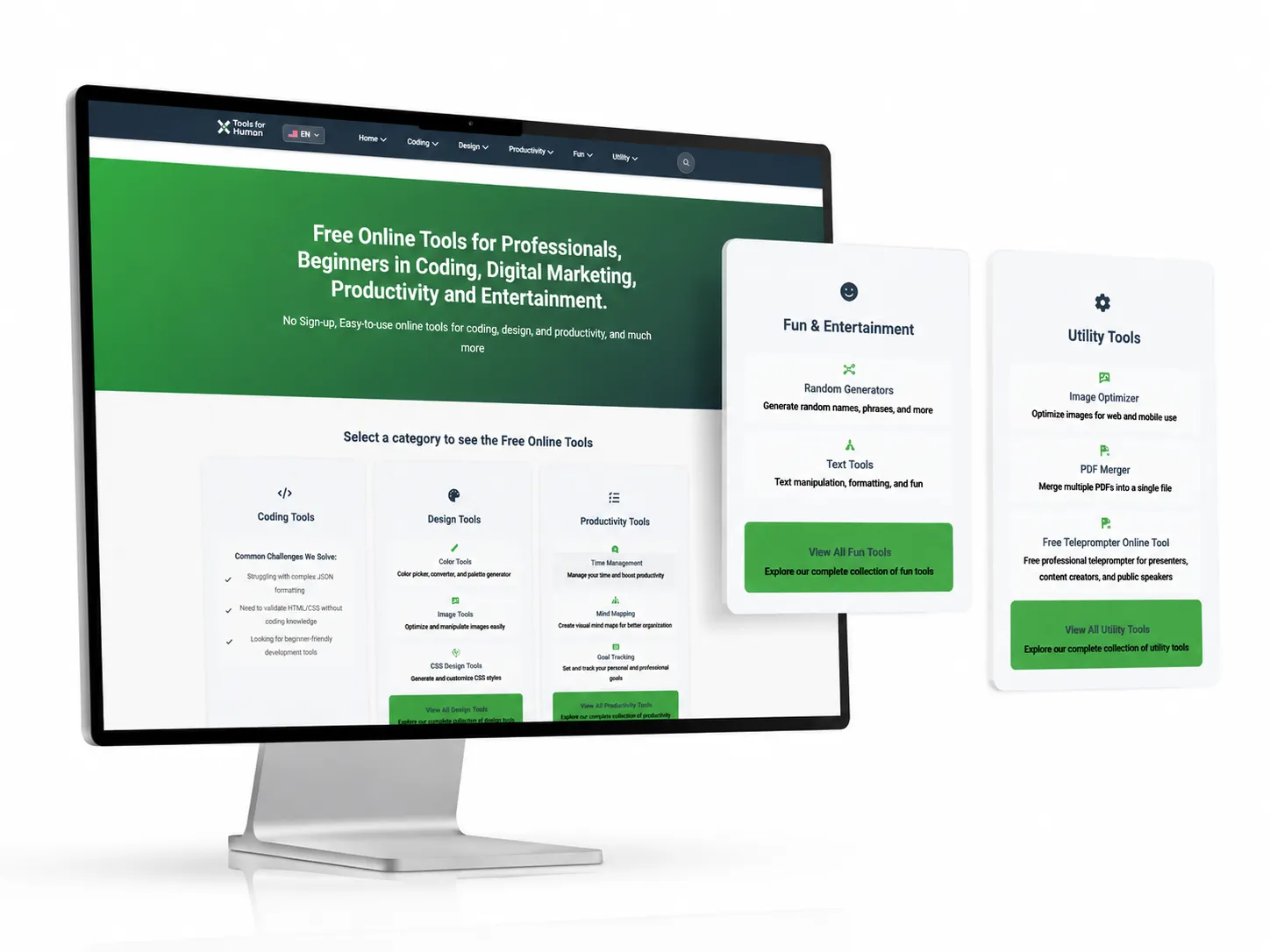

Verified result
26,300Microsoft Copilot citations
Toolsforhuman.com Microsoft Copilot
AI Search Rankings used schema-first Answer Engine Optimization, layered JSON-LD, robust canonicals, and multilingual hreflang to help Toolsforhuman.com earn 26,300 Microsoft Copilot citations across 160 plus pages, including Spanish-language pages, in a sample window of about three months.
Limitation. The result applies to the documented sample window and does not guarantee future citations.
-
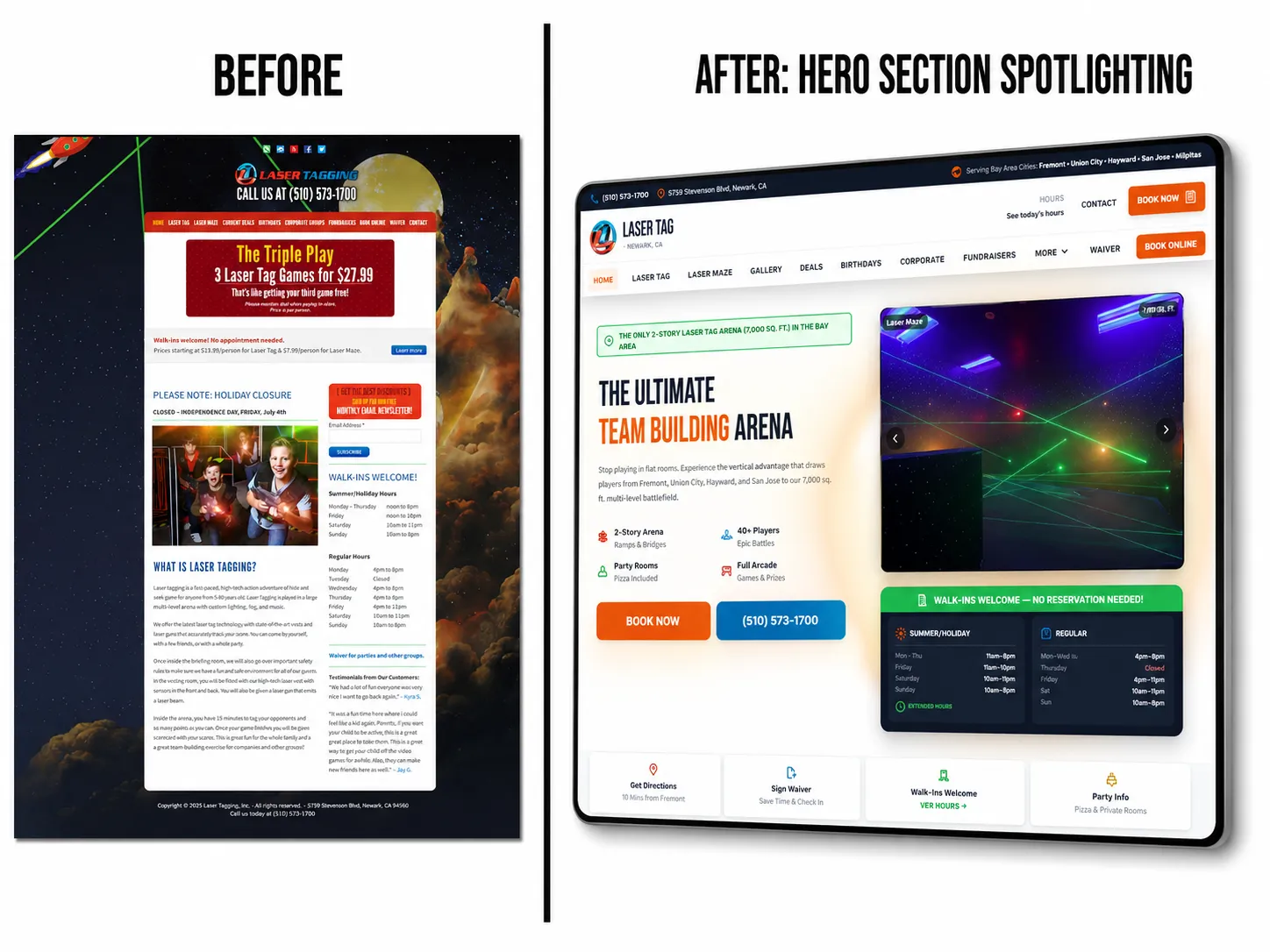

Client-reported private Google Search Console result
4,460Google generative AI impressions
Laser Tagging Inc. Google AI Overviews and AI Mode
AI Search Rankings rebuilt the Laser Tagging Inc. digital brand and website, expanded its service-area relevance across Newark, Fremont, San Jose, and nearby Bay Area communities, and documented 4,460 client-reported Google generative AI impressions in the selected last-three-month window.
Limitation. The report measures Google generative AI impressions. It does not prove a ChatGPT recommendation, a click, a booking, a lead, or revenue.
Newer data shared by the client: a Google Search performance export for search type Web shows 6,109 impressions in the last 3 months as of September 13, 2026, compared with 947 in the previous 3 months. That total covers all Google web results, not only AI features. Checked September 13, 2026. Open the search performance export shared by Laser Tagging Inc. (opens in a new tab)
Read the Laser Tagging Inc. case studyView the Laser Tagging Inc. project
How AI Search Rankings labels and measures results
Start with your own baseline
Every engagement starts with a measured baseline. Ask for a free review and see where your business stands today.
Why AI Search Rankings
Why businesses choose us for Schema Markup
Senior expertise, published prices, and honest reporting from the first conversation. This is what partnering with us looks like.
Led by a named expert
Jagdeep Singh, Founder and Lead Answer Engine Optimization Strategist, brings 12+ years of SEO and digital marketing experience and 9 Google Skills certifications you can verify.
Prices published before you call
Three monthly packages at $799, $1,500, and $3,500, each with a written list of the work delivered every month.
Reports you can check yourself
We record the real AI answers for your buyer questions and list the work shipped beside them, never invented rankings.
Proof with its limits stated
Results such as 26,300 Microsoft Copilot citations for Toolsforhuman.com are published with how they were measured and what they do not prove.
Honest about what no one controls
We guarantee the work, not rankings or citations, so you are never sold a promise that cannot be kept.
A fast, straight answer
A strategist replies within 24 hours, Monday to Friday, and tells you plainly when we are not the right fit.
Ready to work with a team that shows its work?
Start with a free review and a clear, published scope, with no obligation.
Published pricing
What Schema Markup costs, and which scope fits you
Every price is a fixed monthly scope of work. It is never a promise about rankings or AI citations, because other companies control those systems.
Schema Markup is included from Local AI Answer Starter at $799 per month, and in every higher package.
Local or service-area business
Three published monthly packages, built around local and service-area businesses. Each one lists exactly what is delivered every month.
-
Local small businesses
Local AI Answer Starter
$799 per month
Help nearby customers find, trust, and choose your business across Google, Google Maps, and AI answers.
- Local buyer prompts tracked
- 25
- Local competitors compared
- 3
- Page optimized monthly
- 1
- New local answers monthly
- 3 to 5
-
Growing local businesses
Local AI Answer Growth
$1,500 per month
Win more calls, bookings, and quote requests across Google, Google Maps, and AI answer engines.
- Local buyer prompts tracked
- 50 to 75
- Local competitors compared
- 5
- Pages optimized monthly
- 2 to 3
- New local answers monthly
- 5 to 10
-
Competitive & multi-location businesses
Local AI Answer Authority
$3,500 per month
Build a complete local authority system across Google, Maps, AI answers, reviews, and content.
- Local buyer prompts tracked
- 150 to 250
- Local competitors compared
- 10
- Pages optimized monthly
- 5 to 8
- New local answers monthly
- 10 to 20
Not sure which package fits? Answer four questions in the AI Search Fit Check, or compare every package line by line.
National, B2B, SaaS, or online business
Our three published packages were built around local and service-area businesses, which is why their names say Local. National, B2B, SaaS, and online businesses are also served, and the work itself is the same: buyer questions tracked, pages improved, facts corrected, and results reported.
What changes is what the questions and pages cover, such as products, categories, comparisons, and several markets. Start with the free package fit review. We compare your buyer questions, pages, and competitors against the published scopes and confirm in writing whether one of them fits before any work starts.
Request a free package fit reviewStraight answers
Schema markup questions, answered
Plain answers to the questions buyers ask most. If yours is not here, ask a strategist directly.
What is schema markup?
Schema markup is a standard way of writing your business facts in page code, using the schema.org vocabulary, so machines read them directly rather than working them out from your sentences. The useful types are usually a company or local business type, a service type, a question type, and where genuinely true, reviews, people, and articles.
Which schema types does our business need?
For most businesses a small set covers it: your company or local business, your services, your breadcrumbs, and the questions your page answers. Adding types your page does not support introduces risk rather than value, so we add only what your content genuinely justifies.
Does schema markup help with Google AI Overviews and ChatGPT?
Google states that no special structured data is required to appear in AI Overviews or AI Mode. Accurate markup still states your facts in a machine readable form that search engines and other tools can read, which is why we keep it correct rather than presenting it as a shortcut to placement.
Our SEO plugin already adds schema. Is that enough?
Usually not. Plugin markup is generic because it cannot know what your page says, so we typically find question markup that does not match the visible questions, templated service descriptions, and duplicates from your theme. We keep what is right and correct the rest.
Can schema markup get us star ratings?
Only where genuine reviews are shown on the page. Rating markup without visible supporting reviews breaks Google's structured data guidelines and risks a manual action. We add it when it is true and refuse when it is not.
Should we use JSON-LD, microdata, or RDFa?
Google recommends JSON-LD. It lives in one block rather than being spread through the HTML, so it can be generated from the same data that displays the page and stays accurate when the design changes. We use JSON-LD for new work.
How do you validate schema markup?
We test each template in Google's Rich Results Test and the Schema Markup Validator, then compare every marked up value with the visible page. Markup ships only when it parses without errors and every fact it states can be seen by a visitor.
What happens if our schema markup has errors?
Markup with errors can be ignored, and Google Search Console reports structured data issues for the types it supports. Nothing visibly breaks on the page, which is why errors often go unnoticed for months. Monthly rechecks catch them.
Does schema markup need ongoing maintenance?
Yes. Every content edit, service change, and redesign can break the match between code and page, and nothing visibly fails when it drifts. That is why checking is included monthly rather than sold as a one time job.
How much do schema markup services cost?
Schema markup is included in every package at $799, $1,500, or $3,500 per month, with the number of pages and the range of types increasing at each level.
Free, with no obligation
Find out whether your schema helps or hurts
Choose what you need help with and tell us where to reply. We validate your markup against your visible pages and respond within 24 hours.
What happens after you send it
- We review your website and the answers AI tools give for your buyer questions.
- A strategist replies within 24 hours, Monday to Friday, 9am to 6pm Pacific Time.
- You get a clear recommendation, including when we are not the right fit.
Prefer to talk now?
This request form needs JavaScript. You can still reach a strategist by phone, text, or email using the links beside this form, or use the contact page.
Request received
Thank you. A strategist will reply within 24 hours, Monday to Friday, 9am to 6pm Pacific Time. A confirmation email is on its way.
While you wait, you can run the free AI visibility audit or compare the published packages.
We use your details only to reply to this request. There is no obligation, and we never sell your information. Read our privacy policy.